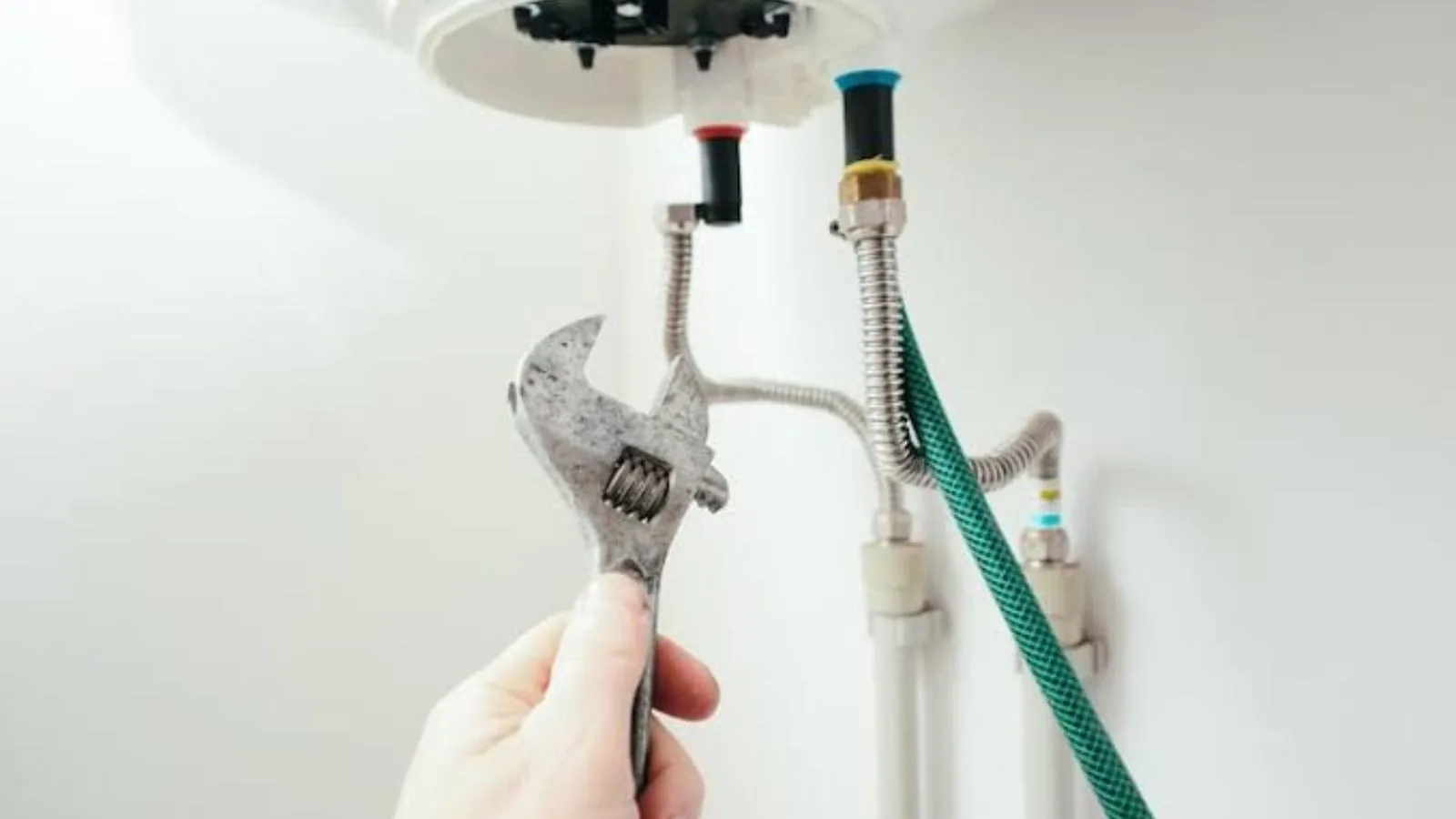
A water heater that fails does not leak slowly in the way a faucet does. The tank can empty into a garage, closet or utility room in a short time, and the water goes wherever the floor slopes. This page is about water heater leak cleanup in Ridgefield, WA, and our line is open 24/7.
Switch off power to the heater at the breaker if the panel is dry and reachable, or shut off the gas valve if it is a gas unit. Close the cold water supply valve on top of the heater, keep everyone out of the wet area, and photograph the tank and the floor. If you smell gas, leave the building and call 911 and your gas utility before you call us.
Water heater leak emergency: what to shut off
Three shutoffs matter, and the order depends on safety. Power or gas goes first, because a heater element that stays energized in water is a hazard. The cold supply valve comes second and stops new water from filling the tank. The main valve is the fallback if the heater valve fails.
The City of Ridgefield handles voluntary shutoffs through Utility Services by appointment on weekdays, which does not help at night, so know where your own valves are. Do not touch a wet panel while standing in water.
Where the heater sits decides how far the damage spreads. In a garage, water often runs across a slab toward the door and wets stored boxes. In a closet inside the house, water reaches carpet, baseboards and the drywall behind them. In an attic or upper floor, water drops through the ceiling below.
| Heater location | Where the water goes | What the cleanup targets |
|---|---|---|
| Garage or utility room | Across the floor and into stored items | Extraction, then drying of the wall base and any drywall touched |
| Interior closet | Carpet, baseboards, wall cavities | Carpet and pad, trim, drywall, see carpet water damage |
| Attic or upper floor | Insulation and the ceiling below | Ceiling and insulation, see ceiling water damage repair |
| Basement or crawl space | Bottom floor and framing | Extraction, then drying of joists and any finished walls |
Water heater leaking?
Shut off power or gas and the cold supply, then call. We will explain the scope before work starts.
How the cleanup works
Callers often describe a heater that burst and left water everywhere, followed by a need to dry the area and replace drywall. The order is extraction, moisture mapping, removal of what cannot dry, drying with air movers and dehumidifiers, and then the rebuild.
Water from a heater tank is usually clean when it first escapes, but it can pick up dirt and mineral deposits from the tank bottom and from the surfaces it crosses. The crew checks the readings rather than assuming, and treats the water category according to ANSI/IICRC S500.
Wet drywall behind a heater is a common repair. The wall and drywall page covers what is cut and what is dried, and the drying itself is on the structural drying page. A plumber replaces the heater, and this service does not install or repair water heaters.
Insurance notes
The Washington Office of the Insurance Commissioner lists a water heater among the sources of water damage in its guidance on water damage sublimits, and says sudden leaks are generally covered while gradual leaks over a long period generally are not. A tank that slowly seeped for weeks could therefore be treated differently from one that burst.
Keep the old tank until the adjuster has seen it or has told you to dispose of it. Photograph the model label, the corrosion and the wet areas.
What shapes the cost of this job
- Spread of the water. A heater in an open garage costs less to dry than one in a closet beside carpet and walls.
- Materials touched. Drywall, trim and carpet need different handling.
- Drying time. Thick framing at the base of walls dries more slowly than the surface.
- Contents. Boxes and stored items in the leak path may need cleaning or replacing.
- Rebuild scope. Replacing drywall and paint is separate from mitigation.
Ask your insurer whether your policy has a water damage sublimit and how it treats a sudden tank failure. Your policy and the cause decide what is covered.
Where water heater crews respond
A leaking tank is the same problem in any town. We take calls from Ridgefield, Woodland and Kelso as well as from La Center, Heisson, Longview, Camas, Washougal, Battle Ground and Vancouver.
Frequently asked questions
Do you handle water heater leak emergencies at night or on weekends in Ridgefield?
Yes. The line is open 24/7. A tank failure often happens when no one is watching, and the crew can start extraction as soon as the heater is shut down.
Do you replace the water heater?
No. A plumber replaces or repairs the heater. This service removes the water, dries the area and prepares it for repair.
Is the water from a heater tank safe to touch?
It starts clean but can be hot at first and may carry sediment. Keep clear until power is off, and treat standing water near electrical equipment as a hazard.
Should I keep the failed tank?
Yes, until your insurer says otherwise. The tank, the model label and photos help show the cause.
Will insurance cover a water heater leak?
Sudden failures are generally covered under many policies, and slow leaks over time generally are not. Ask your insurer, because policies differ.
Water still spreading? Call now.
Shut off power or gas and the cold supply, then call the 24/7 line.