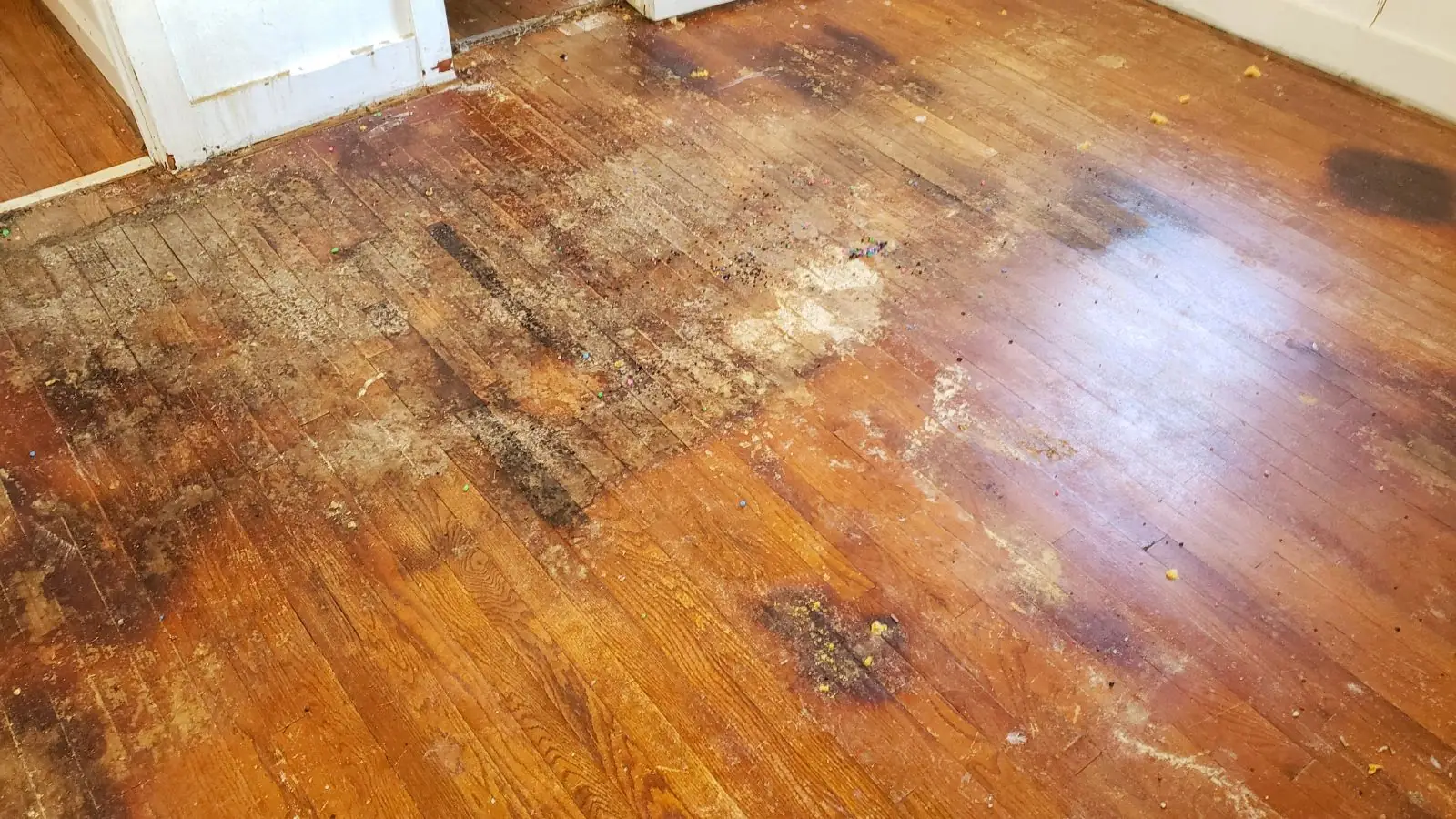
Wood absorbs water and swells, and then it moves. That is why a floor that looked fine on the day of a leak can cup or buckle a week later. This page covers hardwood floor water damage repair in Ridgefield, WA, and our line is open 24/7.
Wipe up standing water, lift area rugs, and photograph the floor. Do not use heat guns or space heaters to speed up drying, which can crack the boards. Call us before sanding or refinishing, since finishing a wet floor can lock the damage in.
What cupping and crowning mean
Cupping happens when the edges of a board rise higher than the center, because the bottom absorbed more moisture than the top. Crowning is the opposite, and it often shows up after a cupped floor is sanded while still wet. Buckling is a floor that lifts off the subfloor.
Callers describe two common causes. A washer valve that broke and ran for a while, and an HVAC condensate line that backed up. Both soak the floor slowly from below or the edge, which is the cupping pattern.
| Floor condition | What it suggests | Typical path |
|---|---|---|
| Light cupping, floor still firmly attached | Moisture is in the boards but the structure is sound | Controlled drying, then reassess |
| Wide gaps between boards after drying | Boards shrank after swelling | May settle or need replacement of sections |
| Buckling or lifting from the subfloor | Heavy moisture, glue or fasteners failed | Boards removed, subfloor dried |
| Laminate or engineered wood swelling at edges | The core absorbed water | Often replaced, see carpet and pad options for soft floors |
Floor starting to cup?
Call early. Drying sooner gives boards more chance to settle back.
How a wet hardwood floor is dried
The crew measures moisture in the boards and the subfloor, since a dry-looking top can sit on a wet base. Floor drying equipment pulls moisture through the boards, sometimes using mats or panels that draw water out under the surface. Air movers and dehumidifiers dry the room.
Readings guide the process. Drying a floor too fast can crack it, and too slowly lets it stain and stay swollen. The method is explained in more detail on the structural drying page.
Honest limits and trade-offs
Not every floor can be saved. Water that sat for days, contaminated water, glue-down floors on a wet slab and engineered boards with swollen cores often have to come up. In other cases the boards dry and settle back close to flat, and a light sanding and finish restore the floor.
Sanding and refinishing are separate trades from drying. A good order is dry first, then wait to see where the floor settles, and only then decide whether to refinish or replace. For a larger rebuild, the permit office on Pioneer Street can say what applies.
If the water came from an air conditioner drain, see the AC leak page, and a washer failure is covered on the appliance leak page.
What shapes the cost of this job
- How long it stayed wet. Boards wet for days are less likely to settle.
- Floor type. Solid, engineered and laminate floors behave differently.
- Installation. Nailed floors, glued floors and floating floors dry differently.
- Area. A hallway differs from a whole level.
- Refinish or replace. Sanding and finishing, or new boards, follow drying.
Whether this is covered turns on the policy wording and on whether the leak was sudden or slow, so ask your insurer. Photograph the floor from several angles.
ANSI/IICRC S500 is the reference for drying wet flooring, and it is the reason readings are taken in the subfloor as well as the boards.
Where flooring crews work
Floors are checked on site, wherever you live. Our line covers Ridgefield, Vancouver, Camas, Washougal and Battle Ground, plus La Center, Heisson, Woodland, Kelso and Longview.
Frequently asked questions
Can a cupped hardwood floor be saved?
Often yes if it is dried promptly and properly. The crew checks moisture and tells you whether the boards are likely to settle.
Should I sand right away?
No. Sanding a wet floor can cause crowning. Wait until readings are normal and the boards have settled.
Can I use a space heater to dry the floor?
No. Fast heat can crack the boards. Controlled drying equipment is safer.
Is laminate flooring salvageable after a leak?
Usually not once the core has swollen.
Is hardwood water damage covered by insurance?
Sometimes. The cause and the policy language decide, so ask your insurer.