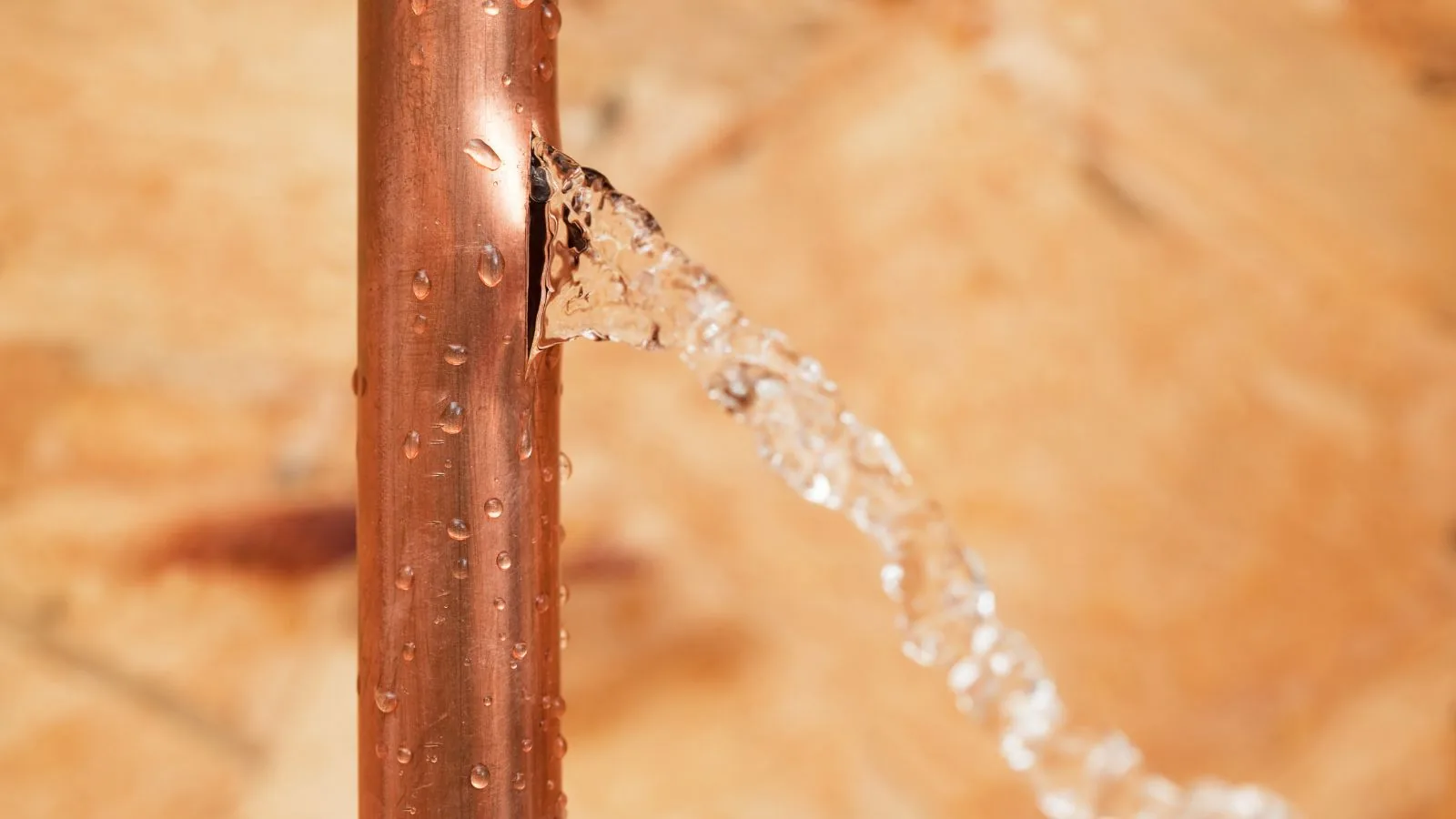
A burst pipe pushes water out at supply pressure, so a large volume can reach a floor in a short time. This page is about cleanup after a pressurized supply line fails in a Ridgefield home. Our line is open 24/7, and the first minutes matter more than anything we can do later.
Find your main water valve and turn it off. Open a faucet at the low point of the house to drain the line, and switch off power to the wet area only if you can reach the panel without standing in water. Move valuables up off the floor, take photos, and call us while the cleanup plan is built.
Burst pipe emergency: the first ten minutes
The City of Ridgefield provides water service inside the city limits. Its Utility Services office handles voluntary shutoffs by appointment on weekdays, so at night or on a weekend your own main valve is the fast route. Know where it is before you need it, usually near the meter, where the line enters the house, or in a utility closet.
If the valve will not turn or the water keeps coming, call the City's Public Works line at 360-887-6002 and then call us. Never leave pressurized water running while you look for a plumber, because a plumber repairs the pipe and this crew deals with the water it already released.
Scenarios callers describe are consistent. A pipe splits under a kitchen sink and water crosses the cabinet floor. A line inside a wall lets go and the drywall softens before anyone notices. A fitting fails in an upstairs bathroom and the ceiling below starts to stain. Each one sends water to a different place, so the cleanup differs.
| Where the pipe failed | Where the water goes | What gets checked |
|---|---|---|
| Under a sink or in a cabinet | Cabinet base, toe kick, floor below | Cabinet panels and the subfloor edge, see kitchen water damage |
| Inside a wall cavity | Down through the wall to the plate and subfloor | Drywall, insulation and baseboards, see wall and drywall repair |
| Upstairs or in an attic | Ceiling below, then light fixtures and insulation | The ceiling plane and any fixtures, see ceiling water damage |
| Basement or crawl space line | Pooling on the floor beneath | Joists, insulation and stored contents |
Pipe still running?
Shut the main valve first, then call. We will walk through what to protect while a crew is arranged.
How burst pipe cleanup works
Cleanup starts with extraction to remove the standing water, followed by a moisture map of floors, walls and ceilings below the failure. The mapping matters because a pipe burst in one room frequently wets the room beneath it.
Wet insulation and drywall that has lost its strength are usually cut out, and cabinets or baseboards are pulled enough to let air reach the cavity. Air movers and LGR dehumidifiers then run until meter readings return to normal for the material. Drying is the part people underestimate, and the full process is on the structural drying page.
Insurance and documentation
The Washington Office of the Insurance Commissioner notes that sudden, accidental leaks such as a supply line bursting under a sink are generally covered, while gradual leaks over a long period generally are not. Coverage always depends on your policy, so ask your insurer before you decide how to proceed.
Photograph the failed pipe, the wet areas and any damaged belongings, and keep every receipt. Moisture readings and an itemized scope from the crew give the adjuster a record of what was wet and why.
What shapes the cost of this job
- Number of rooms wet. A burst line seldom stays in one room, so the count of affected rooms drives equipment and days.
- Water category. Fresh supply water starts as clean water, but hours of contact with building materials can change that.
- Materials. Hardwood, laminate, carpet and finished walls dry or fail differently.
- Drying days. Thick framing and subfloors take longer than the visible surface suggests.
- Rebuild scope. Replacing drywall, trim and paint is separate from the drying and cleanup.
Check your policy for a water damage sublimit, which caps what is paid for water losses. Ask your insurer if you are unsure how your policy treats this kind of loss.
Extraction and drying after a split line follow ANSI/IICRC S500, the industry standard for water damage restoration.
Where burst pipe crews respond
A split line at night is dispatched the same way as one at noon. Crews head to Ridgefield first, then to La Center, Woodland, Battle Ground and Vancouver. Say which town you are in when you call.
Frequently asked questions
Do you handle burst pipe emergencies at night or on weekends in Ridgefield?
Yes. The line is open 24/7. A burst pipe at 2 a.m. gets the same live response as one at noon, and the plan is laid out in plain words first.
Do you repair the pipe itself?
No. A plumber repairs or replaces the pipe. This service removes the water, dries the structure and prepares it for repairs.
What if I cannot find my shutoff valve?
Check near the water meter, where the line enters the house, and in utility closets or garages. If you cannot stop the water, call the City of Ridgefield Public Works emergency line at 360-887-6002 and call us right after.
How soon does water get into the walls?
Within minutes. A pressurized line forces water into wall cavities and under flooring quickly, which is why the moisture map checks areas you cannot see.
Will insurance cover a burst pipe?
Sudden, accidental bursts are generally covered under many policies, but coverage depends on your policy and the cause. Ask your insurer, and keep photos and receipts.
Water still spreading? Call now.
Shut off the main valve, then call the 24/7 line.