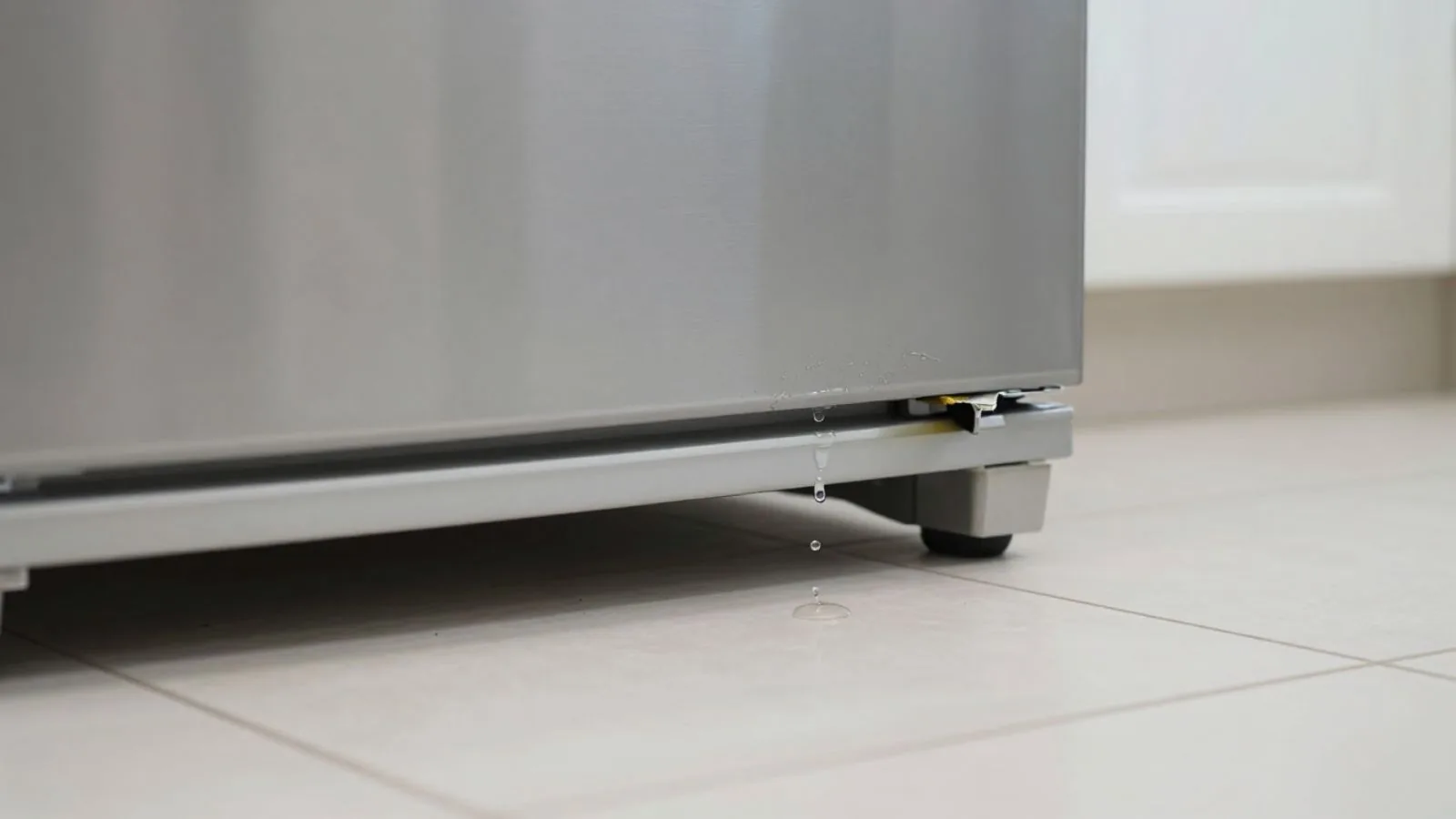
Appliance leaks are quiet. A washing machine supply valve cracks, a dishwasher drain line weeps, or a refrigerator ice-maker tube splits behind the unit, and the water runs for hours before anyone notices. Here is how an appliance leak gets dried out in Ridgefield, and the phone is staffed around the clock.
Unplug the appliance only if the outlet is dry. Close the supply valve behind or beside the machine, or the main valve if you cannot reach it. Mop up what you can, pull the unit away from the wall if it is safe, and photograph the failed part and the wet area before you call us.
Appliance leak emergency: water running behind the machine
The common sources are predictable. Washer supply hoses and valves, dishwasher inlet and drain connections, refrigerator and ice-maker lines, a toilet supply line, and sink connections beside appliances. The OIC's consumer guidance uses a supply line bursting, a fridge ice-maker line snapping and a dishwasher overflowing as examples of sudden leaks.
Each source leaves a different pattern. A washer valve can spray under pressure and wet a whole laundry room. A dishwasher leak often soaks the cabinet base and the kitchen floor first. An ice-maker line may leak behind a fridge for weeks and show up as a swollen floor edge.
| Appliance | Common failure | Where the water collects |
|---|---|---|
| Washing machine | Supply hose or valve breaks, drain hose slips | Laundry floor, wall base, floor below |
| Dishwasher | Door seal, inlet or drain line | Cabinet base and kitchen floor, see kitchen water damage |
| Refrigerator | Ice-maker or water-dispenser line | Under the unit and into the subfloor edge |
| Toilet | Supply line or wax seal | Bathroom floor and the ceiling below, see ceiling water damage |
Appliance leaking right now?
Close the supply valve, then call. We will tell you what to protect while a crew is arranged.
A slow leak and a sudden leak are not the same
Water under a leaking appliance may have run for hours or for weeks, and the difference matters for the cleanup and for insurance. A fresh split hose usually leaves wet but sound materials. A slow leak can soften a subfloor, lift flooring and stain the wall base.
The OIC says gradual leaks that continue over a long period are generally not covered, even if you did not know about them, while sudden ones generally are. Your policy decides, so ask your insurer, and record what you found with photos.
How the cleanup works
The crew pulls the appliance if needed, extracts water and maps the moisture across the floor and wall base. Laminate and engineered flooring swell when wet and often cannot be saved, while tile and sealed hardwood may dry in place with floor drying equipment. The hardwood floor page explains the cupping questions.
Cabinet toe kicks and baseboards are pulled to dry what sits behind them, and drywall is checked low on the wall. If an unnoticed washer valve break ran for a while, expect the moisture map to find water further from the machine than the visible wet area.
Living in a home with an HOA or shared walls
The City of Ridgefield says most of its neighborhoods have a homeowners association and that new subdivisions are required to have one. If you share a wall or a ceiling with a neighbor, an appliance leak can affect them, so tell your HOA and check your CC&Rs about who handles repairs to shared elements. This is general guidance, since each association sets its own rules.
What shapes the cost of this job
- Duration of the leak. A fresh split costs less than weeks of seepage.
- Flooring type. Laminate and engineered wood usually need replacement, tile often does not.
- Cabinets and walls. Toe kicks, cabinet bases and wall base are checked and sometimes removed.
- Floors below. A second-floor laundry can wet a ceiling and room beneath.
- Drying equipment days. Cabinetry and subfloors dry slowly.
Ask your insurer whether the leak counts as sudden or gradual under your policy. Keep the failed hose or valve if you can.
The category of the water, set out in ANSI/IICRC S500, decides how a washer or dishwasher leak is handled.
Where appliance leak crews respond
Washer and dishwasher leaks come in from Ridgefield and the towns around it, including Battle Ground, Vancouver, Camas and Washougal in the south and east, and La Center, Heisson, Woodland, Kelso and Longview in the north.
Frequently asked questions
Do you handle appliance leak emergencies at night or on weekends in Ridgefield?
Yes. The line is open 24/7. A washer or dishwasher that is still leaking is treated as an emergency.
Do you repair the appliance?
No. An appliance technician or a plumber repairs the machine or the supply line. This service removes the water and dries the structure.
Can wet laminate flooring be saved?
Usually not once it has swollen. Tile and some sealed floors can dry in place, and the crew will tell you which is which after taking readings.
What if the leak ran for weeks behind the fridge?
The cleanup widens, because a long leak soaks subfloor and framing. Your insurer may treat it as gradual, so check your policy.
Do I need my HOA involved?
If a shared wall, ceiling or common area is affected, yes. Check your CC&Rs and tell the HOA early.