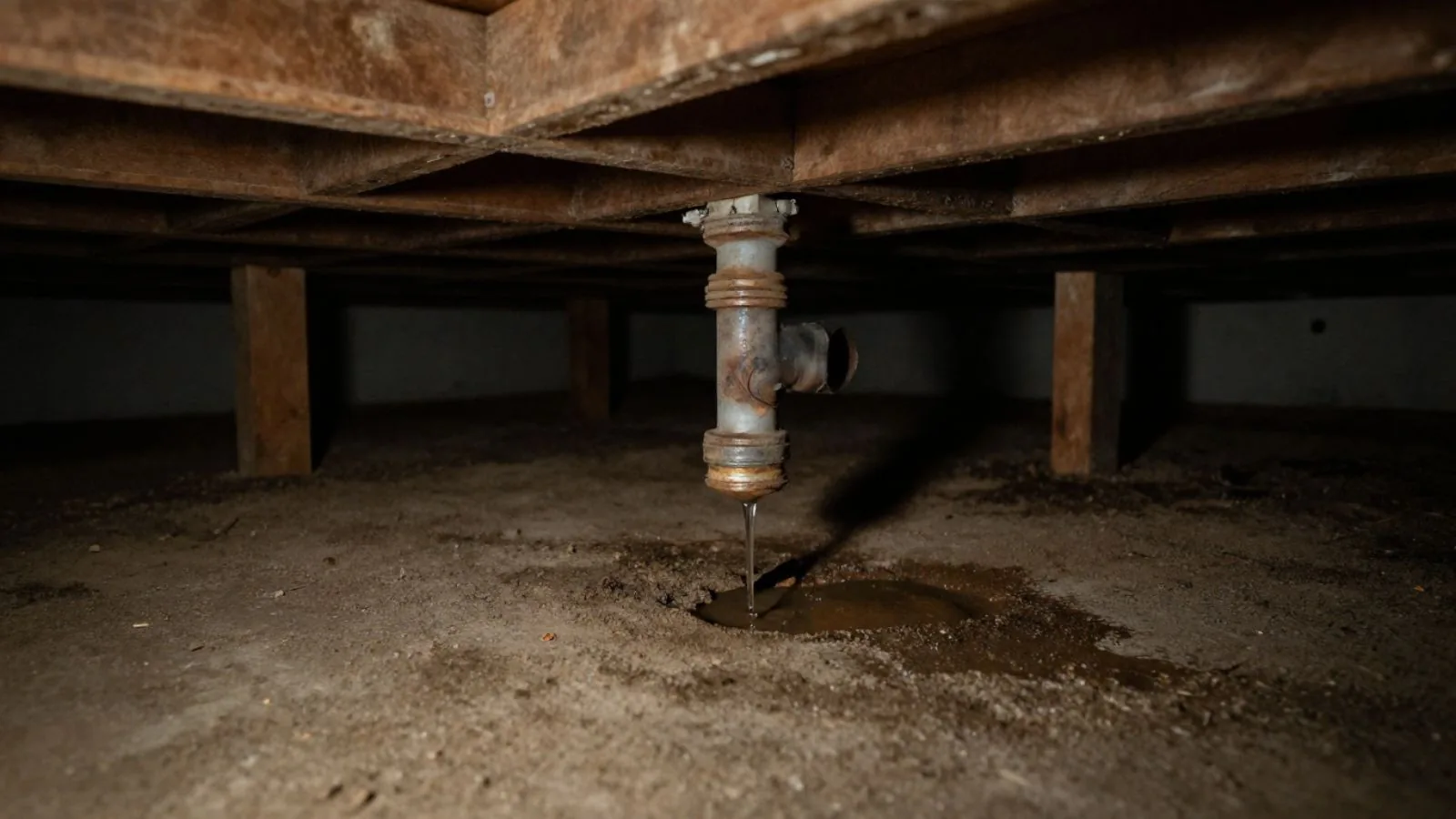
A crawl space is a low void under the floor with bare soil or a thin liner underneath. When water gets in from a leak, a failed irrigation line or heavy rain, it can sit there unseen for weeks. What follows is the crawl space process for Ridgefield houses, and our line never closes.
Do not crawl into a space with standing water if electrical equipment, wiring or a heater is present. Turn off the main valve if a pipe is leaking, photograph from the access hatch, and call us. The crew works with protective gear and the right equipment for tight spaces.
How water gets under a house
Sources fall into a few groups. A supply or drain line under the floor breaks. An irrigation line or its backflow device fails and floods the yard toward the foundation. Roof and gutter runoff collects against the foundation. Or groundwater rises after long rain.
Western Washington gets steady winter rain. Climate normals from NOAA's Vancouver station list an annual total of 37.47 inches, with more than five inches in each of November, December and January. City planning documents for the I-5 Junction area describe clay-rich soils that drain slowly and hold water in low places, which is why runoff may linger near a foundation.
| What you find | What it usually means | What the cleanup does |
|---|---|---|
| Puddles on the soil or liner | A leak, runoff or groundwater | Pump out, then dry the space |
| Wet or sagging insulation | Water or condensation has soaked it | Remove and replace after drying |
| Damp joists and subfloor underside | Moisture rising or dripping onto wood | Dry with air movers and dehumidifiers, readings on the wood |
| Musty smell in the house | Moisture reaching living space | Find the source, dry the cavity, see structural drying |
Water under the house?
Photograph it from the hatch, then call. We will explain the scope and price before work begins.
Why crawl space water does more damage than it looks
The space is dark, enclosed and poorly ventilated, so wet materials stay wet. Wood joists and the subfloor above can absorb moisture from below, and the moist air can reach the floor above. Fiberglass insulation that falls or soaks loses its value and can hold water against the wood.
Wet crawl spaces may also be connected to rooms above through plumbing and wiring openings, so a leak below can show as damp flooring above. If an irrigation backflow failure caused it, the water may have come from the yard and carry soil.
What the cleanup includes
Crews pump out standing water and remove wet insulation, then clear debris from the soil surface. Air movers and dehumidifiers dry the space, and the wood is read with a meter so drying continues until readings are normal for the material.
Water that rose from a sewer line or an overflow follows the contamination steps on the sewage backup page. A supply line leak is covered on the burst pipe page, and floors above may need the work on the hardwood floor page.
This page covers cleanup and drying. It does not include installing vapor barriers, drainage systems, sump pumps or waterproofing, which are separate trades, and a crew that says otherwise is selling something this line does not offer.
What shapes the cost of this job
- Depth and area of water. A shallow puddle in one corner differs from a flooded space.
- Access. Tight hatches and low clearance slow the work.
- Insulation and debris. Removal and disposal add labor.
- Drying days. Enclosed spaces with little airflow dry slowly.
- Source repair. Fixing the pipe or drainage problem is separate.
Ask your insurer how your policy treats water under the house, because groundwater and runoff are often treated differently from a plumbing break.
Safety checklist for a wet crawl space
- Do not enter if the water touches wiring or ductwork
- Tight spaces trap bad air, so never crawl in alone
- Wear boots, gloves and a dust mask if you must look
- Shut off the water source before you investigate
- Leave heavy wet insulation for the crew
Moisture goals for framing and subfloor follow ANSI/IICRC S500, and the crew records readings so you can see when the space is dry.
Where crawl space crews work
Crawl space jobs need a crew that can reach you with the right equipment, so tell the dispatcher your town. The line covers Ridgefield, La Center, Heisson, Woodland, Kelso, Longview, Battle Ground, Camas, Washougal and Vancouver.
Frequently asked questions
Do you waterproof crawl spaces?
No. Restoration removes water and dries the structure. Waterproofing, drainage and vapor barriers are different trades.
Is crawl space water dangerous?
It can be, especially if electrical or heating equipment is nearby or the water is contaminated. Stay out until it is assessed.
How long does a crawl space take to dry?
It depends on the amount of water, the wood and the airflow. The crew checks readings and tells you when the structure is dry.
Can wet insulation be reused?
Usually not once it has soaked, because it loses its value and can hold water against the wood.
Will insurance cover crawl space water?
It depends on the source. A sudden plumbing break is treated differently from groundwater or runoff, so ask your insurer.
Water still spreading? Call now.
Photograph it from the hatch and call the 24/7 line.