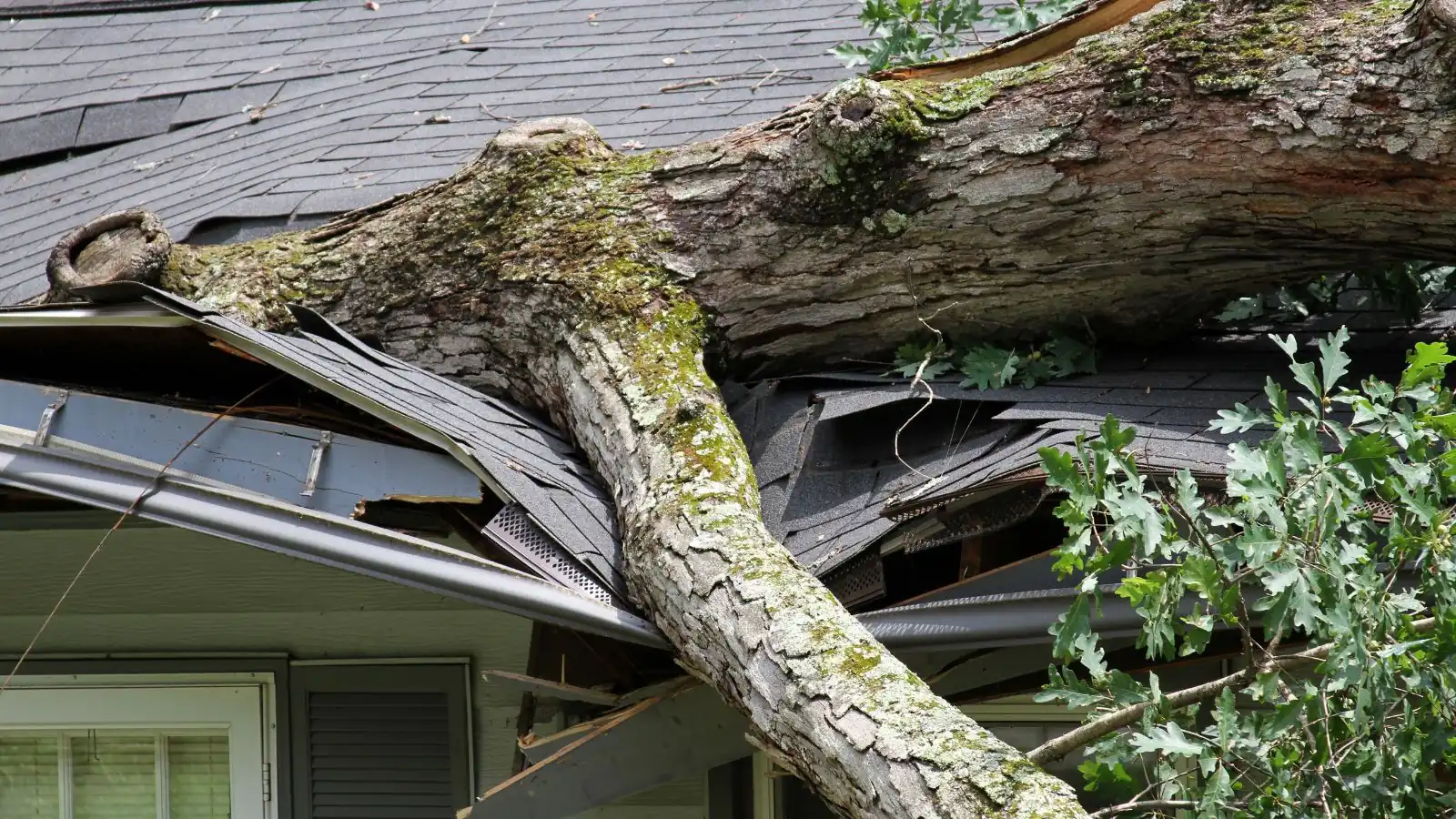
Storm water damage happens when wind and rain get through the building shell. A limb opens a roof, wind drives water around a window, or a gutter overflows into a wall. This is how storm water cleanup goes in Ridgefield. The line stays open 24/7, storms included.
Stay away from downed power lines and from any room where water is near the electrical system. Put a tarp or plastic over the opening only if you can do it safely, move belongings away from the wet area, photograph everything and call us. The crew takes care of the water inside, while a roofer or builder closes the opening.
Storm emergency: water coming in during the storm
If water is entering while the storm is still active, the priority is people first and openings second. Do not climb on a wet roof. Close what can be closed from inside, collect water with buckets, and keep documentation. The Washington Office of the Insurance Commissioner advises making emergency repairs where you can, such as covering a damaged roof with a tarp, and keeping receipts.
How Ridgefield's weather puts water in houses
At the Vancouver station, NOAA climate normals record 37.47 inches of rain in a year, with monthly averages above five inches in November, December and January. Long wet spells mean a small roof or flashing gap gets many chances to leak, and gutters and drains stay busy.
The City of Ridgefield asks residents to report clogged storm drains and flooding to Public Works on its emergency line, 360-887-6002. A drain blocked at the street can send water toward foundations, so reporting it helps, but water inside the home is the job for this page.
| Entry point | What happens | What gets dried |
|---|---|---|
| Damaged roof or flashing | Rain passes through decking into insulation | Insulation and ceiling, see ceiling water damage repair |
| Wind-driven rain at a window | Water runs down the wall and under the sill | Wall cavity and flooring below, see wall and drywall repair |
| Overflowing gutter or downspout | Water backs against siding or the foundation | Siding cavity, crawl space or basement |
| Runoff against the foundation | Water enters at the floor edge | Lower walls and floor, see basement water damage |
Storm water inside the house?
Keep away from electrical hazards, then call. We will explain the scope before work starts.
How storm water cleanup works
Rain that enters through a roof or window is usually clean at first, but it travels through insulation, dust and building materials and can pick up contamination. The crew checks readings rather than assuming. Extraction and moisture mapping come first, then removal of wet insulation and board that cannot dry, then air movers and dehumidifiers.
Rising surface water and creek overflow are different and follow the contamination steps on the flood damage page. Pumping standing water is explained on the extraction page.
Insurance and timing
Wind and rain damage is covered under many homeowners policies, while flooding from rising water generally is not, so what happened decides the outcome. The state insurance commissioner also warns against waiting on repairs, so cover the opening quickly and keep the receipt.
Photograph the opening, the damaged materials and any tarp, and write down the date and conditions. Your adjuster may ask for them.
What shapes the cost of this job
- Size of the opening. A small roof gap differs from a missing section.
- Time before cover. Water that came in for several hours soaks more material.
- Materials wet. Insulation, drywall, flooring and contents each have their own handling.
- Water category. Rain can pick up contamination as it travels.
- Rebuild scope. Roof and siding repair belong to other trades.
Ask your insurer how your policy treats wind-driven rain, and check your flood coverage separately.
Safety checklist during and after a storm
- Stay away from downed power lines and anything touching them
- Do not climb a wet roof or ladder in wind
- Keep power off in any room where water is near outlets
- Photograph damage from the ground and from inside
- Cover openings only where you can do it safely
Cleanup follows ANSI/IICRC S500, the public standard that governs how wet building materials are assessed and dried.
Where storm crews respond
After a big storm, call volume rises across the county, so say your town and what is coming in. We respond in Ridgefield, La Center, Woodland, Heisson, Battle Ground, Vancouver, Camas, Washougal, Longview and Kelso.
Frequently asked questions
Do you handle storm water emergencies at night or on weekends in Ridgefield?
Yes. The line is open 24/7, including during storms.
Do you repair the roof?
No. A roofer or builder repairs the opening. This service removes the water and dries the structure.
Can I tarp the roof myself?
Only if you can do it safely. Never climb a wet roof in wind. A tarp and its receipt can matter for insurance.
How is storm damage different from flood damage?
Storm damage is water through the building shell. Flood damage is rising or surface water from outside, which carries contamination and is not usually covered by homeowners insurance.
Who do I call about a clogged street drain?
Ridgefield Public Works takes those reports at 360-887-6002.
Water still spreading? Call now.
Keep away from electrical hazards and call the 24/7 line.