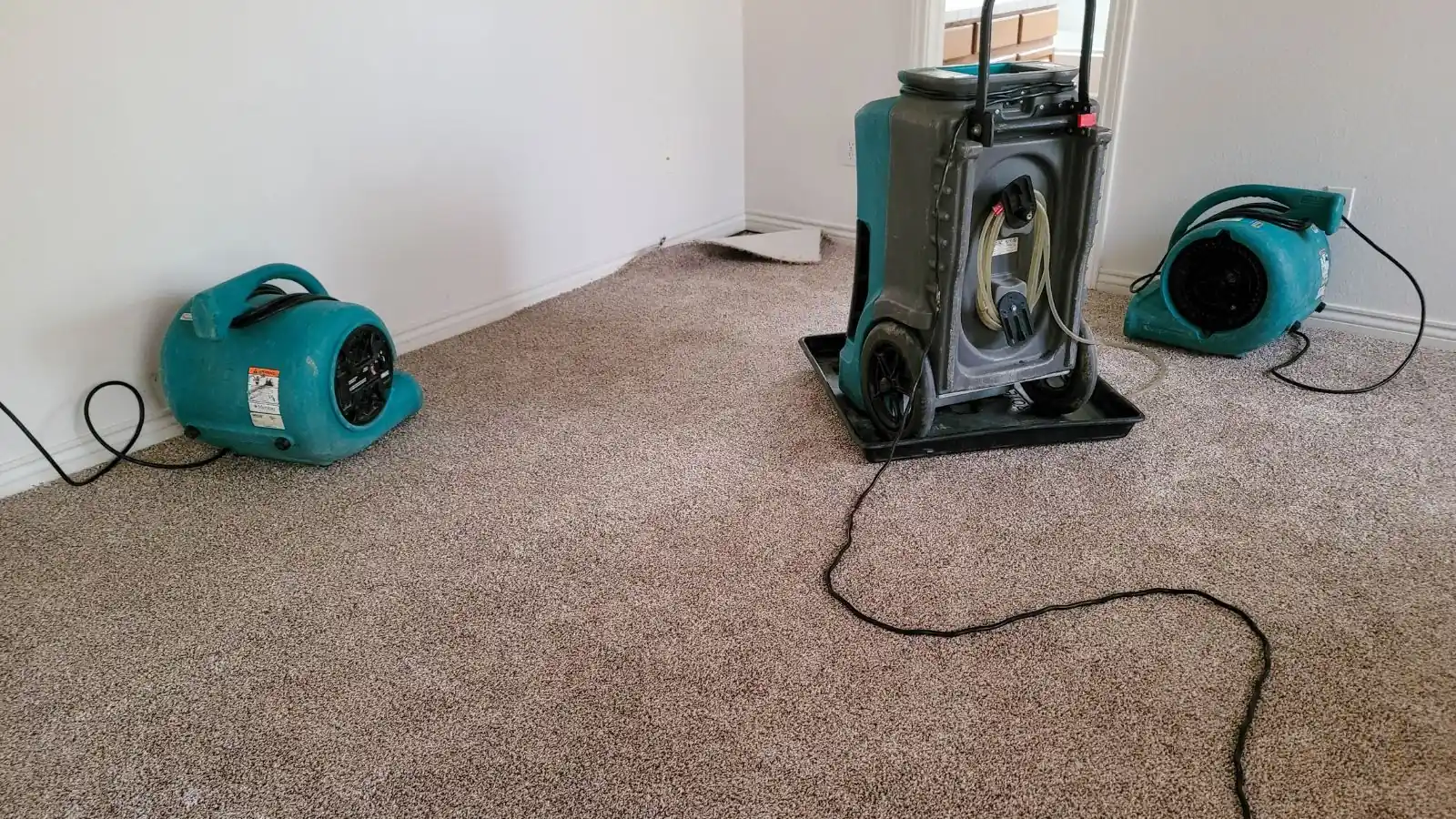
Standing water is an emergency from the first hour, because it soaks into drywall, padding and subfloor while you decide what to do. This page covers water extraction in Ridgefield, WA: the pumping and extraction that removes water from your floors before drying begins. Our line is open 24/7, and the steps below are what you can do while you wait for the call back.
Shut off the source if you can reach it safely. Keep your family and pets out of the water, lift electronics and small furniture, and stay away from outlets and panels if water is near them. If you can smell gas or see water around the electrical panel, leave the building and call 911 or the utility first, then call us.
Extraction is only the first job. Once the pooled water is gone, the materials underneath still hold moisture, which is why extraction usually leads straight into structural drying and dehumidification.
When standing water is an emergency
Any depth is worth a call, but a few situations move to the front of the line. Water deeper than the baseboard, water that has reached a closet or a bedroom, water that has been sitting more than a day, and water that came from the sewer or the ground all change how the job is done.
Callers describe these the same way: ankle-deep water in a laundry room, a bathroom leak that brought a ceiling down, or a whole floor under a quarter inch of water after a supply line let go. In each case the first question is where the water came from, because that decides what can be saved and what needs protective gear.
| Water situation | What it means | What extraction looks like |
|---|---|---|
| A thin film across a hard floor | Clean source water, small area | Wet vacuum passes, then air movers on the floor and lower walls |
| Soaked carpet and pad over a large room | Water is held in the pad and tack strip area | Water pulled through the carpet with a weighted extractor, pad usually lifted |
| Several inches in a basement or laundry room | Large volume, likely under the finished walls | Submersible pump first, then extraction units, then wall-cavity checks |
| Water that came up a drain or in from the ground | Contaminated, not clean | Protective gear, removal of porous materials, sanitizing before any drying |
How water extraction is done
The crew starts with a moisture meter and, where it helps, a thermal camera, so the wet area is mapped before anything is moved. Pumps handle depth. Wet vacuums and extraction units handle the last quarter inch that a pump cannot reach, and weighted extractors press water out of carpet and pad.
Wet baseboards are often pulled so water trapped behind them can drain, and small holes may be drilled low in a wall cavity to release water that would otherwise stay there for weeks. Furniture legs get blocks or foil so stains do not transfer. Everything is photographed as it goes, which helps if you file a claim.
Water on the floor right now?
Describe where it is coming from and how far it has spread. The call takes a few minutes and the scope is explained before work starts.
After the extraction
Pulling out the visible water removes the bulk of it, yet extracted rooms still feel damp because drywall, wood and concrete keep moisture. Air movers, dehumidifiers and daily meter checks finish the job, and that process is covered on the structural drying page.
If the water came from a failed supply line the repair itself belongs to a plumber, and a burst line often needs the burst pipe cleanup steps alongside extraction. If it came from rain or a rising creek, the flood damage page explains the contamination questions.
Ridgefield details that change the plan
Water that is in the street, a ditch or a clogged storm drain belongs to the city. Ridgefield Public Works takes reports of flooding and clogged storm drains on its emergency line at 360-887-6002. Water inside your home or building is the job for this page.
Western Washington rain is steady rather than dramatic. NOAA climate normals for the Vancouver station show November, December and January each averaging more than five inches of rain, so wet conditions persist through much of the winter.
What shapes the cost of this job
- Depth and area. A thin film on one floor takes far less equipment time than several inches across a lower level.
- Water category. Clean, gray and contaminated water are handled differently, and contaminated water adds protective gear and disposal.
- Materials involved. Carpet and pad, hardwood, tile over a slab and finished walls each respond differently to extraction.
- Time since the loss. Water left standing for days spreads upward into walls and cabinets, which widens the scope.
- Access. Tight spaces, stairs and furnished rooms change how much equipment can be staged.
Insurance coverage depends on the cause and your policy, so ask your insurer before you decide what to file. Photos, moisture readings and an itemized scope help document the loss.
Extraction is the first stage described in ANSI/IICRC S500, the published standard we follow for water damage restoration.
Where extraction crews work
Extraction calls come from Ridgefield homes and from La Center, Heisson and Woodland to the north, and from Camas, Washougal and Vancouver to the south. Tell the dispatcher your town, how deep the water is and whether the power is off.
Frequently asked questions
Do you handle water extraction emergencies at night or on weekends in Ridgefield?
Yes. The line is answered 24/7, including nights, weekends and holidays. Water extraction is time sensitive, so after-hours calls are treated as live emergencies and you hear the scope and price before any work begins.
How is extraction different from drying?
Extraction removes the water you can see and the water sitting in carpet and pad. Drying removes the moisture held inside walls, framing and subfloor with air movers and dehumidifiers. Most jobs need both.
Should I run a shop vacuum myself while I wait?
A small amount of clean water on a hard floor can be mopped up. For larger amounts, carpet, or any water that may be contaminated, leave it for the crew, because a household vacuum is not rated for standing water and can spread contamination.
Can you pump out my yard or pool?
No. Exterior yard drainage and pool pumping are separate services. This line covers water inside homes and buildings.
How long does extraction take?
A small room can take part of a day, while a flooded lower level can take longer because the pump work, the extraction passes and the wall checks all follow each other. The crew explains the plan on site once the wet area is mapped.
Water still spreading? Call now.
Call the 24/7 line and describe where the water is coming from.