Homeowners ask what water damage restoration costs, and any number given over the phone without seeing the loss is a guess. We do not publish a price list. What we can tell you is what drives the scope, which in turn drives the price, and we explain the scope and price before work starts.
Understanding the factors helps you compare estimates and spot ones that do not match the job.
Size and depth of the loss
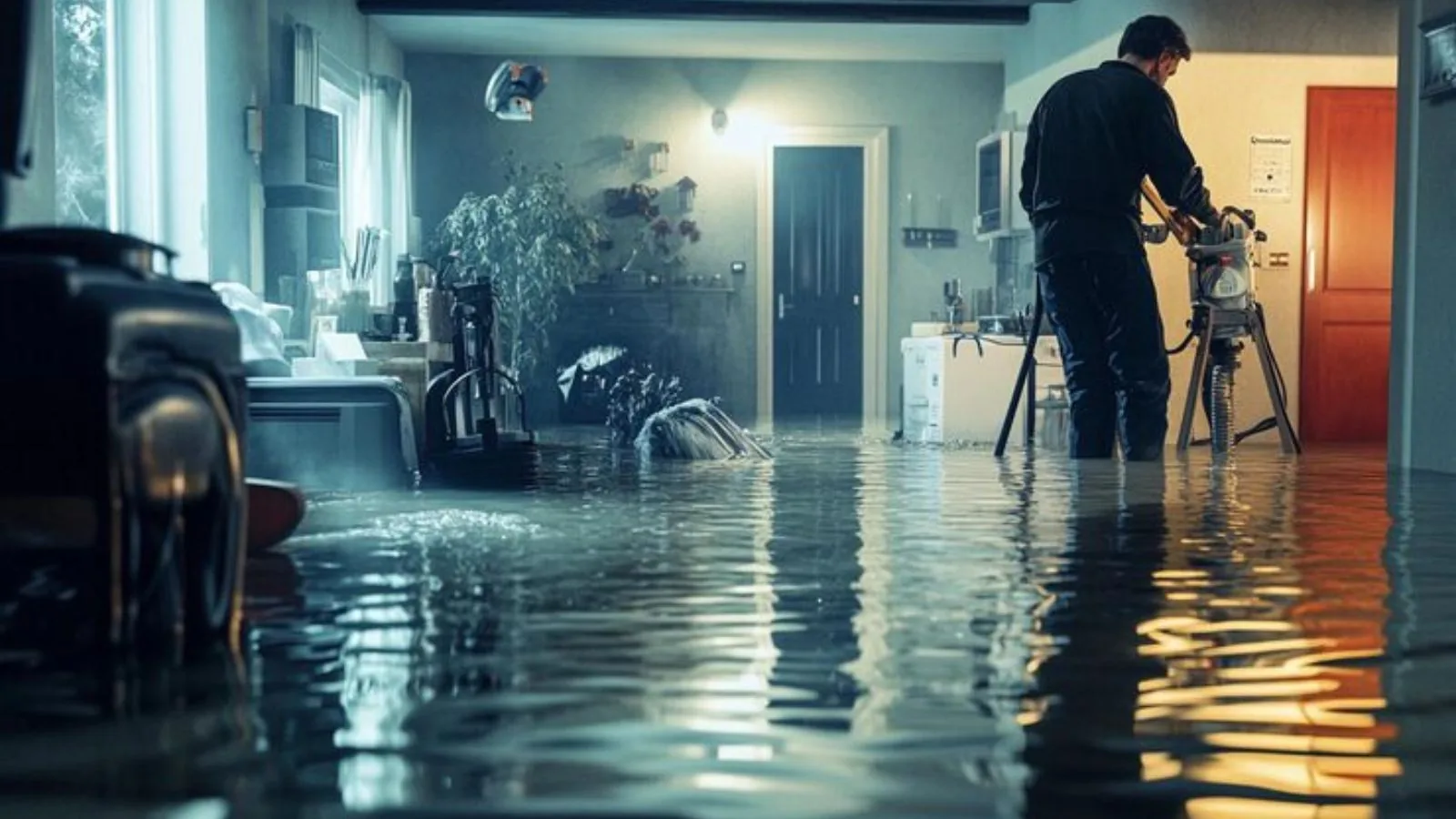
The area of wet floor, wall and ceiling sets how much equipment and how many days are needed. Water that spread across a whole level costs more to dry than a wet corner. Depth counts as well, since several inches of water means more extraction and more wet contents.
Wicking matters too. Water climbs drywall and soaks into subfloor, so the wet area is usually larger than the visible stain.
| Factor | Why it changes the scope | What to ask |
|---|---|---|
| Area wet | More equipment and more monitoring | How was the wet area measured? |
| Water category | Contaminated water means removal and cleaning | What category did you find and why? |
| Time since the leak | Older water has soaked deeper | How long do you think it has been wet? |
| Materials | Carpet, wood and drywall are handled differently | What stays and what goes? |
| Access | Finished spaces need opening up | Where will you cut or lift? |
| Rebuild | Replacement is separate from drying | Is rebuild included in this price? |
Water category and contamination
Clean water from a supply line is the simplest case. Gray water and contaminated water add cleaning, protective measures and removal of porous materials. ANSI/IICRC S500 defines the categories, and the category affects what can be dried and what is discarded. Our sewage backup page explains the heaviest case.
Ask the crew to explain how they decided the category. A good answer refers to the source and the readings.
Want a real scope?
Call the 24/7 line and ask for the scope in plain words before anything starts.
Mitigation versus rebuild
Mitigation is the emergency work to stop the damage from growing, meaning extraction, removal of wet materials and drying. Rebuild is putting the house back together with new drywall, flooring, paint and cabinets. Some estimates mix the two. Ask that they be separated, so that you can see the cost of each and so that your insurer can review them.
A rebuild may need a permit. The city's Permit Center, at 510 Pioneer Street, Suite B, can tell you what applies to your scope.
A note for Ridgefield homes
Ridgefield has a mix of older homes near Historic Downtown and newer subdivisions toward the I-5 Junction. Older construction can mean older materials and plumbing to account for, while newer homes often have more finishes to dry and rebuild. The first walkthrough sorts this out, and there is no per-neighborhood price chart.
If your home sits in a homeowners association, check the covenants before choosing exterior work or a rebuild plan. Pioneer Canyon is described by the City as an association community, and the same idea applies to others.
Insurance and the bill
Coverage depends on your policy and on the cause. The Washington Office of the Insurance Commissioner explains that sudden leaks are generally covered and gradual ones are not. Ask your insurer what applies, and keep the written scope with your claim file. Our extraction page shows what the first stage includes.
Be careful with any contractor who will not put the scope in writing, will not separate mitigation from rebuild or asks you to sign a blank form.
Why a written scope protects you
A written scope turns a vague promise into a checklist. It names the rooms, the materials to be removed, the equipment to be placed and the number of monitoring visits. If something changes, such as finding wet insulation behind a wall, the scope changes in writing too, and you can see why.
It also helps if you file an insurance claim, because a reviewer can compare what was done with what was found. Ask for it before work starts, and keep it with your photographs.
Red flags in an estimate
- No mention of moisture readings
- A single price with no scope
- Pressure to sign before you have read it
- Rebuild and mitigation mixed in one line
- No explanation of the water category
If your loss is covered, your insurer may have its own pricing reference for common line items. Ask them what they expect to see in a scope, and share the written scope as soon as you have it.
How to compare two estimates fairly
Line them up side by side. Compare rooms covered, equipment counts, monitoring visits, materials removed and what is excluded. A lower price that leaves out monitoring or removal is not the same job. Ask each company to explain any difference you cannot account for.
Frequently asked questions
How much does water damage restoration cost in Ridgefield?
It depends on the area, the water category, the materials and the time. We explain the scope and price before work starts.
Why can't you quote over the phone?
The extent of wet materials is hidden. A phone number would be a guess.
Is rebuild included?
Mitigation and rebuild are separate scopes. Ask for them to be itemized.
Does insurance cover the cost?
That depends on the loss and the policy. Your insurer can confirm.
What if two estimates differ a lot?
Compare the scope, the equipment, the days of monitoring and whether rebuild is included.
Water still spreading? Call now.
Call the 24/7 line and get the scope explained first.