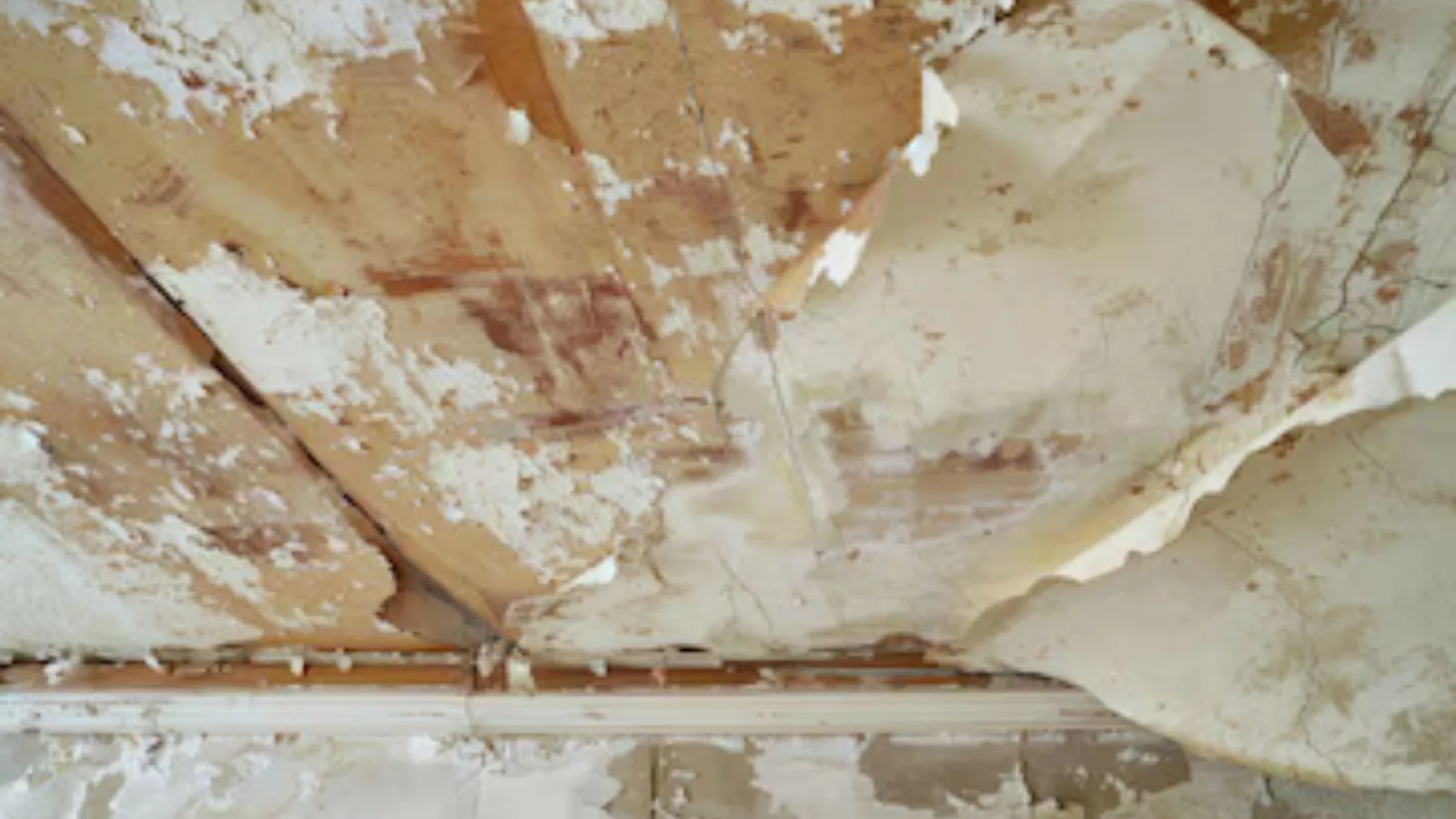
You find a brown stain on a ceiling or a warped baseboard. Is the leak happening now, or did it stop years ago? The answer changes what you do, and it matters if you are buying a house, filing an insurance claim or deciding whether to call a plumber.
No single sign is conclusive. This guide lists what to look for, then explains how a moisture reading settles the question.
Signs of a recent or active leak
Fresh damage often shows up as a damp or cool patch, a stain that is darker in the middle, drywall that feels soft, and paint that is just starting to bubble. Floors may feel damp or show a shiny film. Stains can grow from week to week, so marking the edge with a pencil and a date helps.
A musty smell, rising humidity and a higher water bill can point to an active leak, though they can have other causes.
Signs of older damage
Older damage often shows a ring or tide line where a stain dried at the edge. The surface may be hard, brittle or crusty. Paint may have peeled and curled rather than blistered. Wood may be dark, split or deeply stained. Corroded fasteners and rust streaks suggest repeated wetting over time.
Old damage can still be dangerous, since a stopped leak may have left wet insulation or weakened framing behind the surface.
| Sign | More like new damage | More like old damage |
|---|---|---|
| Stain edge | Soft and spreading | Hard ring, stable |
| Surface feel | Damp, cool, soft | Dry, brittle, crusty |
| Paint | Blistering | Curled and flaking |
| Wood | Damp, swollen | Dark, split, stained |
| Meter reading | Elevated | Normal |
Want a moisture reading?
Call the 24/7 line. A meter reading is the surest way to tell whether the wall is wet now.
A meter settles it
A moisture meter compares a suspect spot with a dry reference. An elevated reading means the material is wet now, whatever it looks like. A thermal camera can show cool, wet areas behind a surface. If the readings are normal and the stain is stable, the leak may be finished, but it is wise to check again after rain or after the fixture is used.
The ceiling water damage page and the wall and drywall page describe what happens when readings show wet materials.
Buying or selling in Ridgefield
Ridgefield was incorporated in 1909 and the city's older blocks sit near Historic Downtown, while new subdivisions have grown toward the I-5 Junction. In an older house, ask for plumbing and roof repair history. In a newer house, ask about the builder warranty period and drainage.
A stain on a ceiling under a roof that has since been repaired may be old, but only a reading proves it. Photograph it, and ask for the repair records.
What to do if it is old damage
Even old stains deserve a decision. If readings are normal and the source is fixed, cosmetic repair may be all that is needed. If materials are weakened, they should be replaced. If you are unsure, have the area opened and checked rather than painting over it.
Keep photographs and records, since they help with insurance and with any later sale.
Questions that help you date the damage
When did you first notice the stain, and has it changed since? Has it rained heavily recently? Does the stain appear after showers, after the dishwasher runs or only in storms? Answers like these tell a plumber or a roofer where to look and help a crew decide how far the water went.
Write the answers next to your photographs. Even a rough timeline is useful, and it matters for an insurance claim, where sudden and gradual damage are treated differently.
Why old damage still matters
A leak that stopped years ago can leave weakened drywall, rusted fasteners and insulation that no longer works. Repeated wetting can also warp framing and flooring. None of that fixes itself, so even a dry stain is worth a look from someone with a meter before you cover it.
What to do next
Start with photographs and a moisture reading. If the area is wet, stop the source and begin drying. If it is dry, decide whether the damaged materials need replacing. Either way, write down what you found and when, since that record is useful later.
Mistakes that hide the truth
Painting over a stain, caulking a gap before finding the source and cutting a hole that is too small all hide information. Take photos and readings first, then decide. A little patience keeps the evidence, helps with an insurance question and saves a second repair.
Frequently asked questions
How can I tell if a water stain is old?
Look for a hard ring at the edge, dry and brittle material and stable size, then confirm with a moisture reading.
Can an old stain still hide wet material?
Yes. Insulation and framing behind a stain may still be wet or damaged.
Should I paint over an old stain?
Only after readings show the wall is dry and the source is fixed.
Does a stain mean mold?
Not necessarily. A stain shows water exposure. We do not do mold testing.
What if I am buying a house with a stain?
Ask for repair records and a moisture reading before you decide.