People ask for a number of days, and the honest answer is a range that depends on the job. A small spill on a hard floor can be dry in a short time. A soaked wall cavity, a wet subfloor or a flooded lower level can take longer. This guide explains what changes the timeline so you can read the plan a crew gives you.
The standard for professional drying is ANSI/IICRC S500, which describes how to assess, extract, dry and verify. The key idea is that drying is finished when readings say so, not when a calendar says so.
What sets the drying time
Materials absorb and release water at different rates. Carpet and thin drywall give up water relatively easily. Solid wood framing, subfloor, concrete and the pad under carpet dry slowly. Insulation and enclosed cavities can trap moisture. The amount of water, the length of time it sat and the temperature and humidity in the house all matter.
Water category matters too. Contaminated water means some materials are removed, not dried, which changes the schedule.
| Factor | Shortens drying | Lengthens drying |
|---|---|---|
| Time before extraction | Water removed quickly | Water left to soak for days |
| Material | Thin, open, non-porous surfaces | Dense wood, concrete, enclosed cavities |
| Water amount | A small film | Standing water across a level |
| Air and humidity | Warm, dry conditions with equipment | Cool, damp conditions |
| Access | Open walls and lifted pad | Closed cavities and finished floors |
How the drying is run
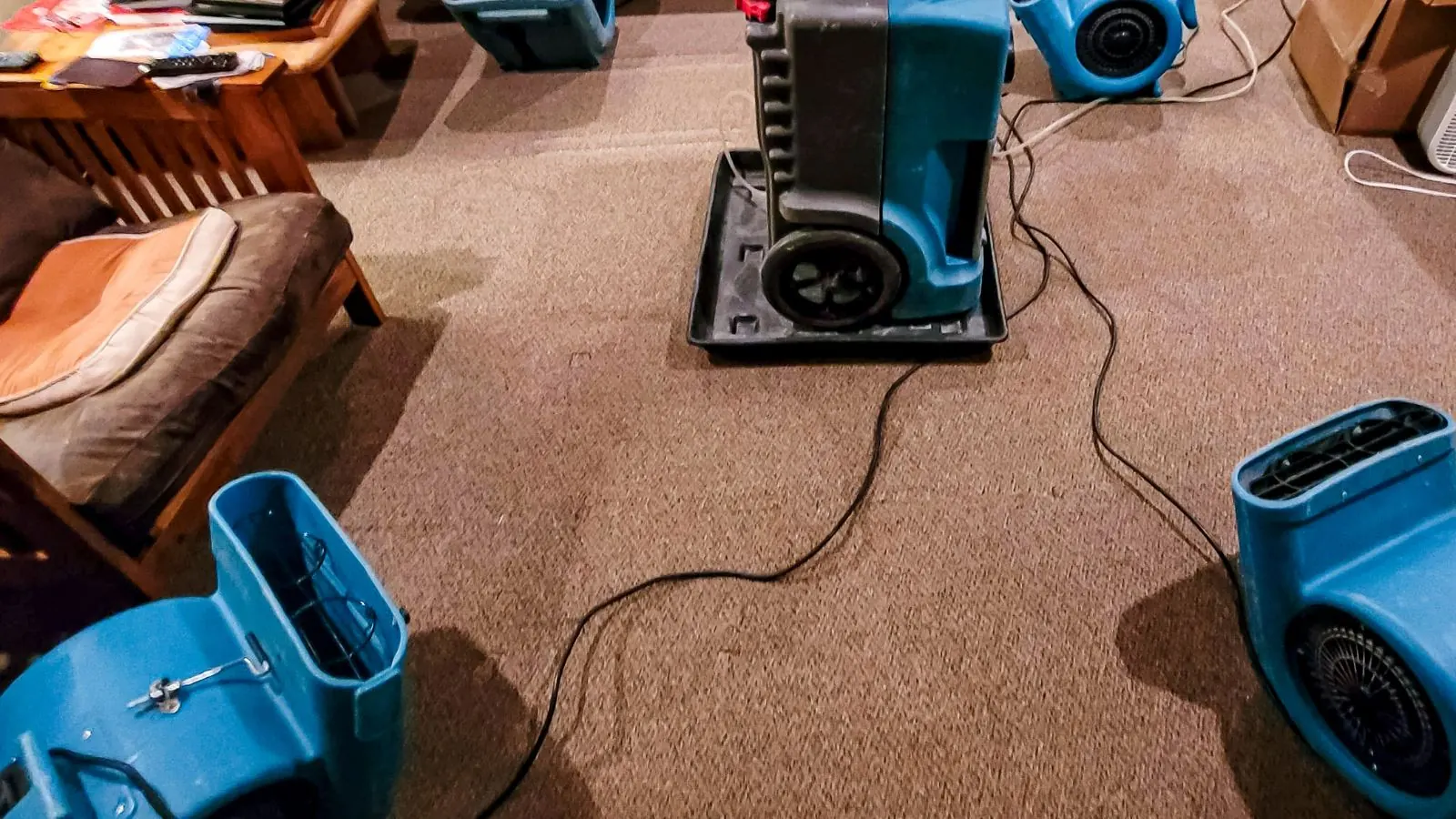
Standing water is extracted first, since pulling water out is much faster than evaporating it. The crew then sets air movers to push dry air across surfaces and dehumidifiers to pull moisture out of the air. Walls, floors and cavities are opened where needed so air can reach them.
A crew checks moisture readings on a regular basis and moves equipment as areas dry. Equipment is removed when readings in each material reach their dry standard. See structural drying and dehumidification for more detail.
Water sitting in your home?
Call the 24/7 line. Extraction starts the clock on drying, and the plan is explained before work begins.
Why Ridgefield weather matters
Climate normals from NOAA's Vancouver station list about 37 inches of rain a year, with more than five inches in each of November, December and January. Outdoor air in a wet winter is damp, so opening windows does not do what it would in a dry climate and equipment has to do the work.
Ridgefield sits in a river and wetland landscape beside Lake River and Gee Creek, and the city's own planning documents note clay-rich soils that drain slowly. Lower floors and crawl spaces can dry slowly for that reason, so monitoring matters.
Warning signs that drying is not finished
A surface that feels dry may sit on a wet base. Signs of unfinished drying include a musty smell, a floor that keeps cupping, paint that bubbles and readings that rise when equipment is shut off. Ask your crew for readings in the materials, not just the air.
If you want to compare how different floors react, see hardwood floor water damage for wood and carpet water damage for soft floors.
What you can do while it dries
Keep doors and windows closed in drying rooms unless the crew says otherwise, keep the equipment running and do not unplug it. Keep pets and children out. Record the equipment count and dates, which also supports your claim.
Resist reopening the room early, since the structure may still be wet and a rebuild over wet framing causes repeat problems.
A realistic way to picture the schedule
Think of the job in three stages. First comes extraction, which is the quickest stage because machines pull water out directly. Next is the drying stage, where air and dehumidifiers pull what is left out of materials. Last is verification, where readings show every wet material has reached its dry standard.
The middle stage is where the days go, and it is also where the range is widest. A single room of wet carpet over a dry subfloor is a smaller project than a wall cavity with insulation that has to be opened up.
Questions to ask about the schedule
- How will you know when each room is dry?
- How often will you return to take readings?
- What happens if readings stall?
- Will any materials be removed rather than dried?
- When will the equipment come out?
If the crew gives you a range at the start, treat it as an estimate and ask them to update it after the first readings. Updates are normal and show the process is being managed.
Why drying should not be rushed
Pressure to finish quickly can lead to closing up walls and laying new floors over damp framing. That traps moisture and sets up a repeat problem. Taking a few more days to reach normal readings usually costs less than redoing a rebuild. Ask for the final readings in writing before you schedule the next trade.
Frequently asked questions
How many days does water damage take to dry?
It depends on the materials, the amount of water and how fast water was removed. Readings tell the crew when it is done.
Why can't I just open the windows?
In a wet climate the outdoor air is often as damp as the indoor air, so equipment works better.
How do I know drying is finished?
Moisture readings in the materials reach the dry standard, and they hold when equipment is off.
Can I shorten the time?
Fast extraction and opening up wet cavities help the most.
Why do the machines run so long?
Dense materials and closed cavities release water slowly, and drying is checked with readings.
Water still spreading? Call now.
Call the 24/7 line to start extraction and drying.