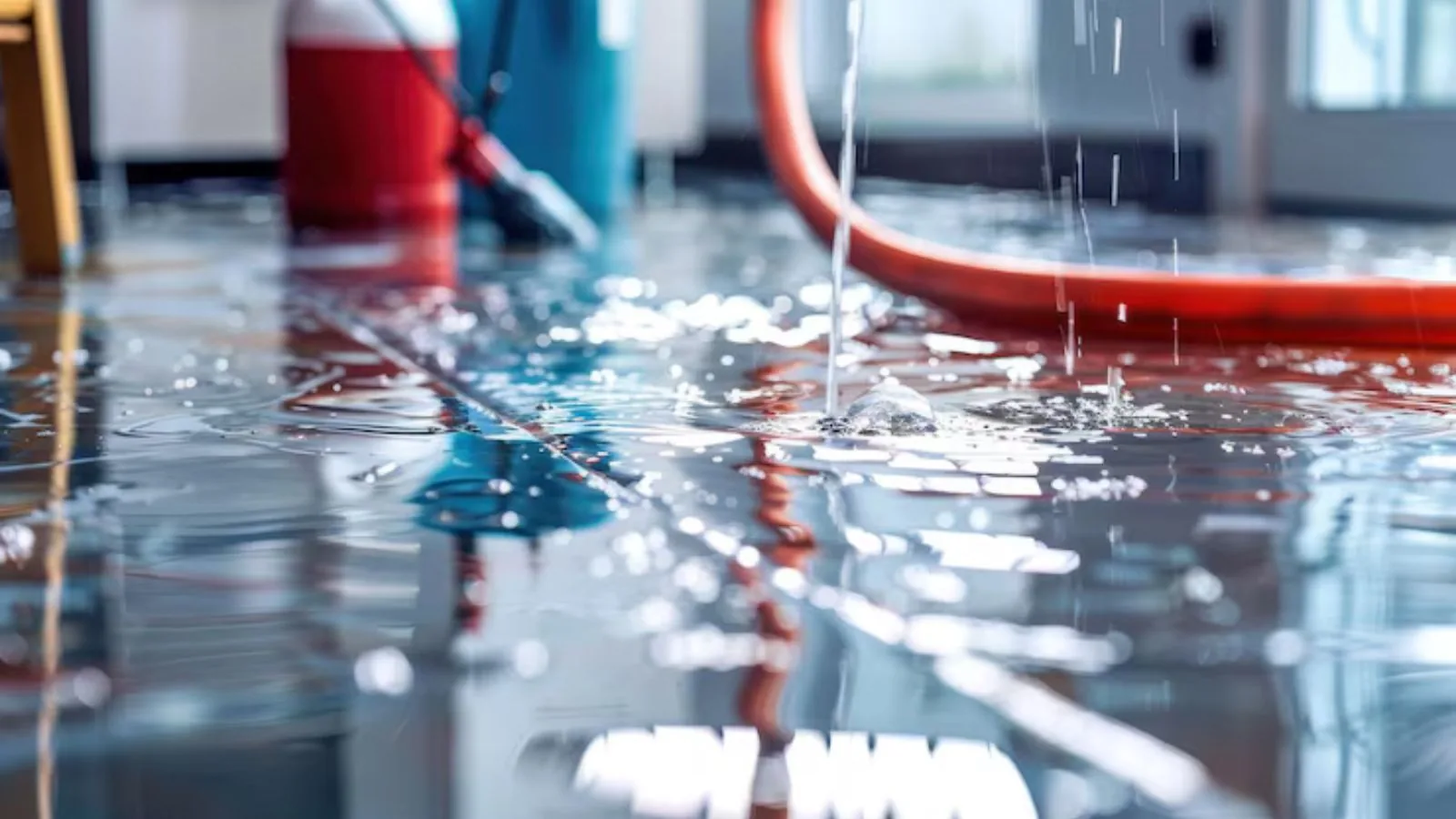
A hidden leak is a leak you cannot see. It runs inside a wall, under a floor or above a ceiling, and it often shows up as a clue somewhere else, such as a high water bill, a musty smell or a patch of paint that will not stay put. Finding it early limits the damage.
This guide covers simple checks a homeowner can do, then explains when to call a plumber or a restoration crew.
Start with the water meter
Turn off every fixture and appliance that uses water. Look at the water meter, which is usually in a box near the street. If the leak indicator is spinning or the numbers move with nothing running, water is going somewhere. Take a photo, wait an hour or two without using water and check again.
If your home is served by the City of Ridgefield, Utility Services at 360-887-3557 can answer questions about your account and meter.
Look for the usual clues
Check under sinks, behind toilets and around the base of the water heater. Look at the ceiling below bathrooms and above kitchens. Check window sills and the base of walls on the weather side. Feel for cool or damp spots, and look for stains, warped trim and peeling paint.
Notice the sounds. Running water you cannot account for, or a hissing near a wall, can point to a leak under pressure.
| Clue | Where to look | Possible meaning |
|---|---|---|
| Water bill jumps | Meter and fixtures | A running toilet or a hidden line leak |
| Musty smell | Cabinets, closets, lower walls | Damp material that is not drying |
| Warm spot on a floor | Slab or floor above a water line | A hot line leak, see slab leak damage |
| Stain on a ceiling | Below a bathroom or roof | Plumbing above or a roof entry, see ceiling water damage |
| Cupping floor near a wall | Floor edges | Moisture from below or the wall |
Think there is a leak behind a wall?
Call the 24/7 line. Moisture mapping can find wet areas without opening everything.
What a moisture map adds
A moisture meter and thermal camera can trace a wet area without cutting into the wall. They show where the water is, not necessarily where it comes from, so the plumber still finds the failed part. Together, the two jobs are faster than either alone.
The restoration crew dries what the water reached. The plumber repairs the pipe. Keep the two separate in your mind and in your paperwork.
Where leaks hide in Ridgefield homes
In a wet climate, small leaks in enclosed spaces rarely dry on their own. The NOAA normals for the Vancouver station show wet conditions through winter, and a damp crawl space or lower wall can hide a drip for a long time.
Many houses here sit on different foundation types, and there is no local figure for how common each is. Check yours, and see the crawl space page if you have one.
When to call
Call a plumber when the meter moves with everything off, when you hear water in a wall or when you find the source. Call a restoration crew when materials are wet, when there is standing water or when a stain is spreading.
If you cannot tell which you need, call us. We will tell you honestly whether it is a drying job or a plumbing job.
Quick checks fixture by fixture
- Toilets: add a few drops of food coloring to the tank and see if color reaches the bowl without flushing
- Sinks: look inside the cabinet with a flashlight and feel the supply lines
- Washer: check both hoses and the floor behind it
- Water heater: look for rust, drips and a damp floor
- Outdoor spigots: look for wet soil near the foundation
When the leak is outside the house
Not every hidden leak is inside. A broken line between the meter and the house can soak the yard and the foundation. Look for a soft or unusually green patch of lawn, a pool of water that does not dry and a drop in water pressure. A plumber can locate and repair the line, and a restoration crew can dry the basement or crawl space if water has reached it.
Keep a leak log
Write down each check with the date, the meter reading and what you saw. A short log helps a plumber narrow the search, and it also documents when you first noticed the problem. If an insurer later asks about timing, you have a record.
What a plumber and a restoration crew each need from you
Give the plumber your meter readings, the places you noticed signs and the dates. Give the restoration crew photographs, the wet areas and a timeline. Both jobs go faster when you bring a clear picture, and neither of us wants you cutting into a wall without cause.
Frequently asked questions
How do I know I have a hidden water leak?
Signs include a rising water bill, a moving meter with everything off, musty smells, stains and warped materials.
Can I find a leak without cutting the wall?
Often yes. Moisture meters and thermal cameras trace wet areas without opening everything.
Do you repair the pipe?
No. A plumber repairs the pipe. We dry what the water reached.
What is the first thing to check?
The water meter with all fixtures off.
What if the leak is under the slab?
A warm floor spot and a moving meter can point to it. A plumber locates the line.