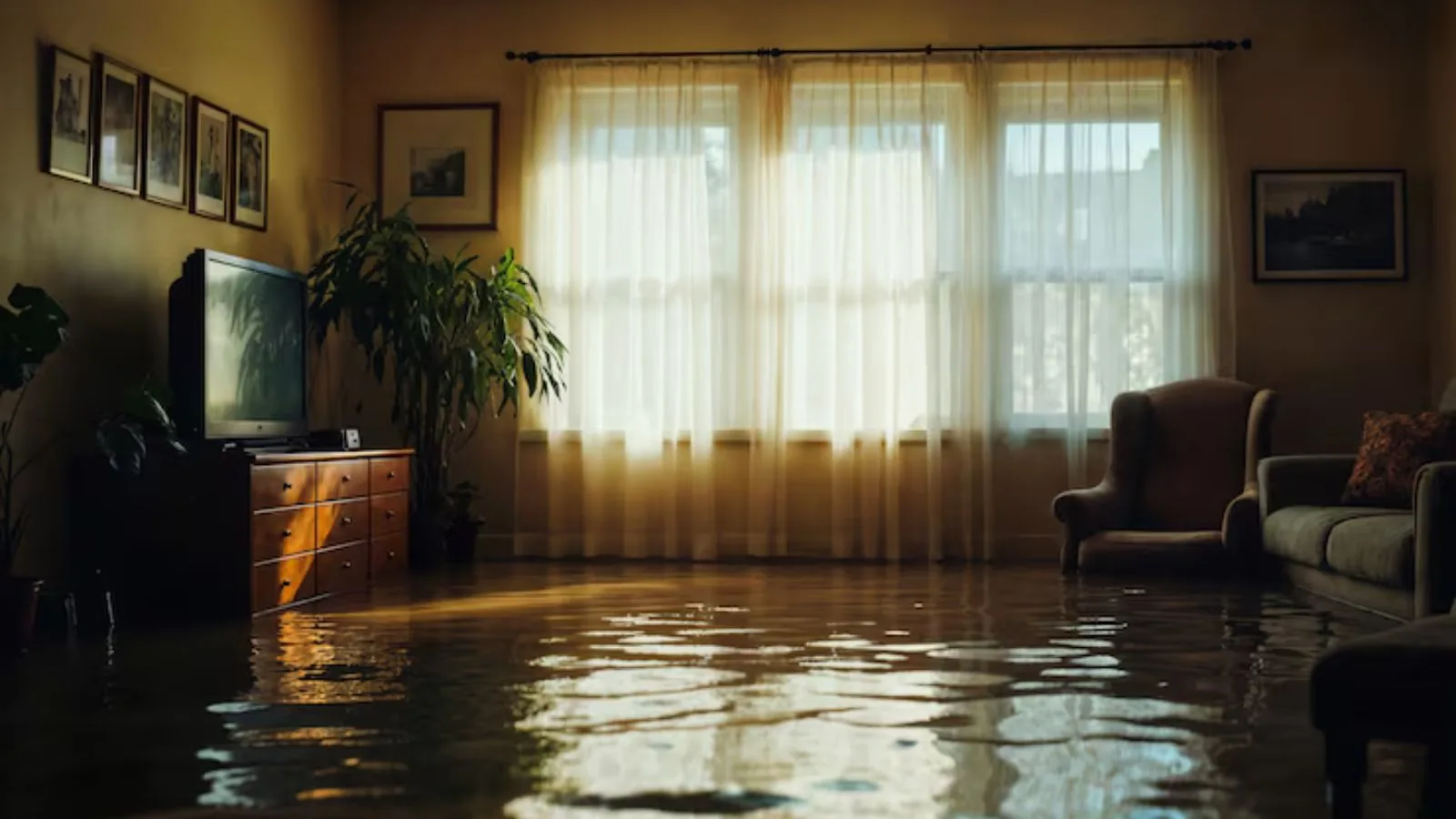
The short answer is that it depends on what caused the water and how it got in. Many homeowners policies cover water damage from a sudden and accidental event, and many exclude damage from slow seepage or from outside flooding. Your declarations page and policy wording decide, so this article explains the usual pattern and the questions to ask your insurer.
We restore water damage. We do not sell insurance and cannot tell you what your policy pays. What we can do is explain how the damage is documented, because a clear record helps whoever reviews the claim.
Sudden and accidental versus gradual
Washington's insurance commissioner explains that leaks which are sudden and accidental are generally covered, while leaks that continue over a long period generally are not. The same agency says a burst pipe, even a frozen one, is usually covered if you heat your home properly.
That distinction matters because the same wet drywall can come from either event. A supply hose that fails on Tuesday is sudden. A drip behind a toilet that has run for months is gradual. Photographs, repair invoices and moisture readings help show which one you have.
| Cause of the water | How policies commonly treat it | What to check |
|---|---|---|
| Burst or split pipe | Often covered when sudden | Whether the home was heated and whether a freeze was involved |
| Appliance or supply line failure | Often covered when sudden | Whether wear or long seepage is cited |
| Slow leak over weeks or months | Often excluded | Maintenance and wear exclusions in the wording |
| Rising flood water from outside | Usually needs separate flood coverage | Whether you carry a flood policy |
| Sewer or drain backup | Often needs an added endorsement | Whether the endorsement is on your policy |
| Rain through a damaged roof | Often covered when the roof opening was sudden | Roof age and maintenance language |
The part people miss: sublimits and deductibles
The Office of the Insurance Commissioner also publishes guidance on water damage sublimits. A sublimit caps what the policy pays for a certain kind of loss, and it can be lower than the main coverage amount. Look for the words water damage, sublimit or limit on certain losses in your declarations.
Your deductible is the amount you pay before coverage applies. A small loss may fall below it. None of this replaces asking your insurer directly, since only the policy wording decides.
If you are unsure whether to file, read your policy first and then call your agent with questions. Asking about coverage is different from filing a claim, though policies and carriers vary, so ask what a call may mean for your record.
Water already in the house?
Call the 24/7 line while you read your policy. The crew documents readings and equipment, which helps whoever reviews a claim.
Flood water is its own category
Standard homeowners policies generally do not cover flooding, which means water that rises from outside such as a river or creek overflow or surface runoff. Flood coverage is usually bought separately. If your property is near a floodplain, ask your agent which policies you hold and what they say.
When water comes in from outside and mixes with ground contaminants, it is treated as contaminated and cleaned accordingly. The flood damage cleanup page explains that process.
What this looks like in Ridgefield
Ridgefield sits where the Columbia River floodplain meets rolling upland, and the waterfront is on Lake River. Clark County Public Works lists flood stage on the Columbia at 16 feet near the Port of Vancouver. Whether your own lot is exposed to flooding is a question for your agent and for county flood maps, not for this page.
Rain data from the NOAA Vancouver station shows more than five inches of rain in each of November, December and January. Long wet spells test roofs and gutters, which is why wind and rain claims are common questions in this part of Clark County.
How restoration records help a claim
Good records show what was wet, when it was found and what was done. A restoration crew documents moisture readings, the equipment placed and the materials removed. Take your own photographs before anything is moved, keep damaged items until the adjuster has seen them if you can, and keep receipts for temporary repairs.
The Office of the Insurance Commissioner warns that your insurance will not cover water damage if you delay repairs, so stopping more water from entering matters. Mitigation, meaning stopping the water and drying the structure, is part of what is expected of you. See water extraction for how the first hours work.
Do not sign anything you do not understand, and do not agree to a scope that someone else wrote for you without reading it. Ask for the scope and price in writing before work starts.
Questions to ask your agent today
- What is my deductible for water losses?
- Is there a water damage sublimit?
- Do I have sewer or drain backup coverage?
- Do I have flood coverage, and does my lender require it?
- What counts as sudden and accidental in my policy?
Frequently asked questions
Does homeowners insurance cover a burst pipe in Ridgefield?
Often yes when the break is sudden, according to the Washington Office of the Insurance Commissioner, but your policy wording decides.
Is a slow leak covered?
Usually not. Gradual leaks over a long period are generally excluded, so keep records of when you found it.
Does homeowners insurance cover a flood?
Standard policies generally do not. Flood coverage is usually a separate policy.
Can your company tell me what my policy pays?
No. Only your insurer can say. We document the damage and explain the work.
Should I wait for the adjuster before I start drying?
No. Waiting can let damage grow, and delaying repairs can hurt a claim. Photograph first, then start mitigation.