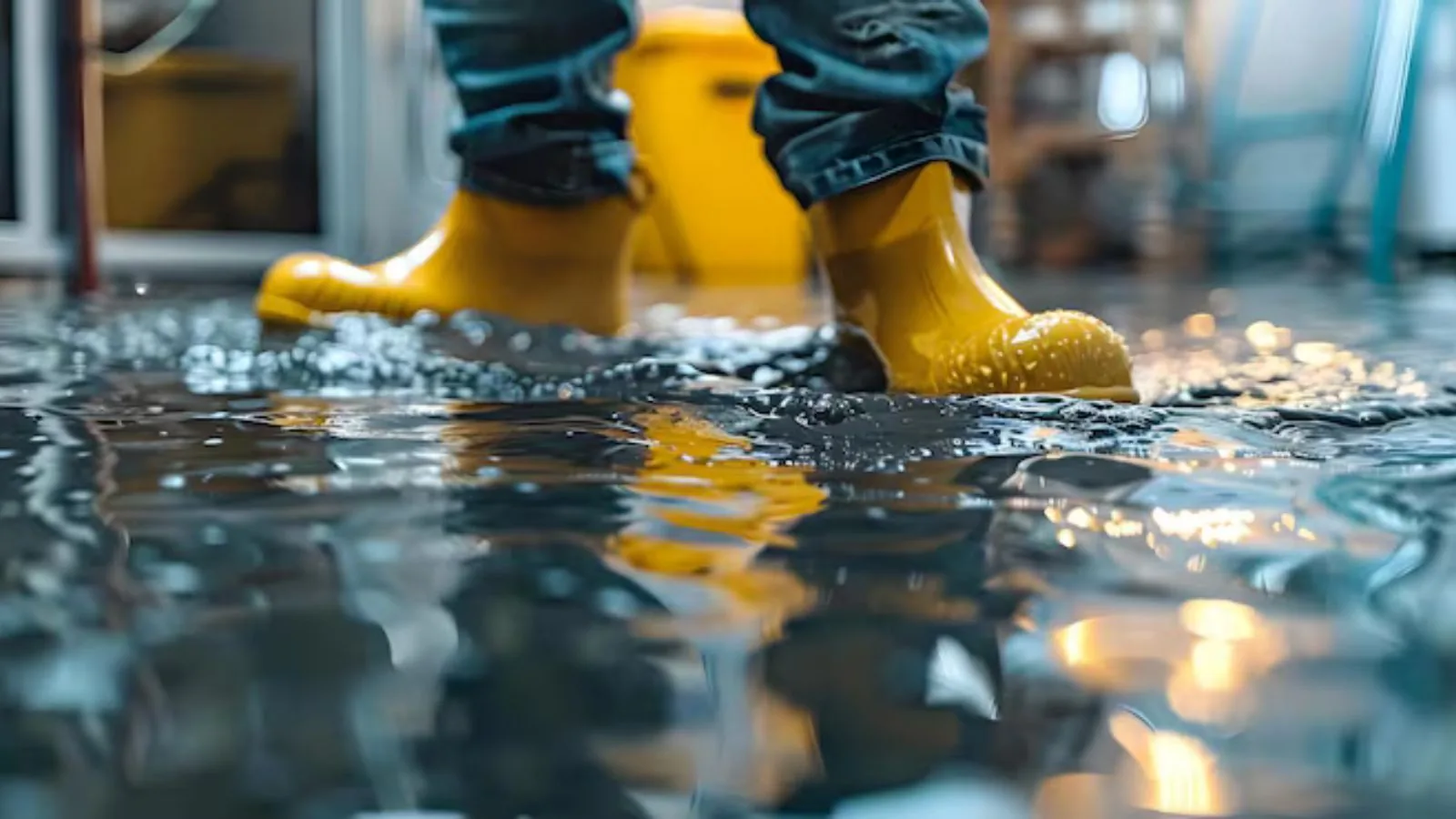
Plenty of water problems are small enough to handle yourself with towels, a mop and a fan. Others hide water in walls, floors and cavities where household tools cannot reach. This guide helps you tell which is which, without pushing you toward either.
The deciding questions are how much water, what kind of water and what it touched.
When DIY is reasonable
A small amount of clean water on a hard, sealed floor that you catch quickly is often a DIY job. Mop it up, dry the surface and run a fan. Check again later for dampness at the floor edge and under cabinets. Lift rugs and move furniture so air can reach the floor.
A shower mat spill, a pot that tipped over or a small drip from a faucet fits here. Stay alert for signs that water went further than you thought.
When to call a professional
Call when the water is more than a spill, when it soaked carpet, pad or drywall, when it came from a dirty source, when it has sat for a day or more or when you cannot tell how far it spread. Professionals bring extractors, air movers, dehumidifiers and meters that read inside materials.
The big difference is verification. A fan can make a surface feel dry while moisture stays in the framing. Readings show when the job is truly finished.
| Situation | DIY reasonable? | Why |
|---|---|---|
| Small clean spill on sealed floor | Often yes | Little absorbs, easy to dry |
| Wet carpet and pad | Rarely | Pad holds water, see carpet water damage |
| Water in a wall | No | Needs a meter and often opening the wall |
| Sewage or flood water | No | Contamination and health risk |
| Water that sat for days | No | Deeper soak and secondary damage |
| Unsure how far it spread | Get a reading | A meter answers it |
Unsure which kind of job you have?
Call the 24/7 line and describe it. We will tell you honestly whether it needs a crew.
What goes wrong with DIY drying
Common mistakes include drying only the surface, using household vacuums on wet floors, leaving wet pad under carpet and closing up a wall too soon. Another is using heat on hardwood, which can crack boards. The result can be a floor that cups later, a musty smell or a repair that has to be done twice.
Read the hardwood floor page for how a wood floor reacts to the wrong method.
Local conditions that make DIY harder
NOAA's Vancouver station normals report about 37 inches of rain a year and damp winter air, so a fan and an open window rarely dry a house the way they would in a dry climate.
Clay-rich soils noted in Ridgefield's planning documents drain slowly, so lower floors and crawl spaces tend to stay damp longer after a wet event.
A safe middle path
Start the DIY steps that always help: stop the source, remove standing water, move belongings and take photographs. Then get readings. If they are normal, you are done. If they are not, you have lost nothing and the crew can pick up from there.
Do not skip electrical safety. Never use a household vacuum on water, and keep power off in wet areas until they have been checked.
A fair look at cost
Doing it yourself costs time and supplies, and renting equipment adds a day rate. Hiring a crew costs more up front. The question is what a mistake costs. If a wet wall is closed up before it dries, repeating the repair can cost more than the first dry-out would have.
That is why readings matter most. If you can borrow or rent a meter and your readings are normal everywhere, you have done the job. If you cannot measure, you are guessing.
What to buy or borrow if you go DIY
- A wet-dry vacuum rated for water
- Box fans and, if possible, a dehumidifier
- A pin or pinless moisture meter
- Plastic sheeting and tape to protect dry areas
- Rubber gloves and boots
Signs your DIY dry-out is not working
Watch for a smell that returns after cleaning, a floor that keeps lifting at the edges, paint that bubbles days later and a window that fogs in a closed room. These tell you moisture is still moving. At that point stop guessing and take readings, or call a crew to take them.
A final practical point: keep your receipts for supplies and rentals. Reasonable mitigation costs may matter to your insurer, and a simple list of what you bought and when helps.
Safety limits for DIY
Never work in standing water near live power, and never enter a space with sewage or flood water without protection. Lifting wet carpet and pad is heavy, and wet drywall can fall apart overhead. If the job needs a ladder, a crawl space or cutting into a wall you cannot see inside, that is a good point to hand it over.
Frequently asked questions
Can I dry water damage myself?
Small clean spills on hard floors often yes. Anything that soaked into materials or sat for a day usually needs equipment.
Will a fan and open windows do it?
Rarely in a damp climate. Readings show whether materials are really dry.
Is it okay to use a household vacuum?
No. It is not rated for water and can be dangerous.
What if I am not sure?
Call and describe it. A meter reading settles it.
Can I start and then call later?
Yes. Stop the source, remove standing water and photograph, then call if readings are high.