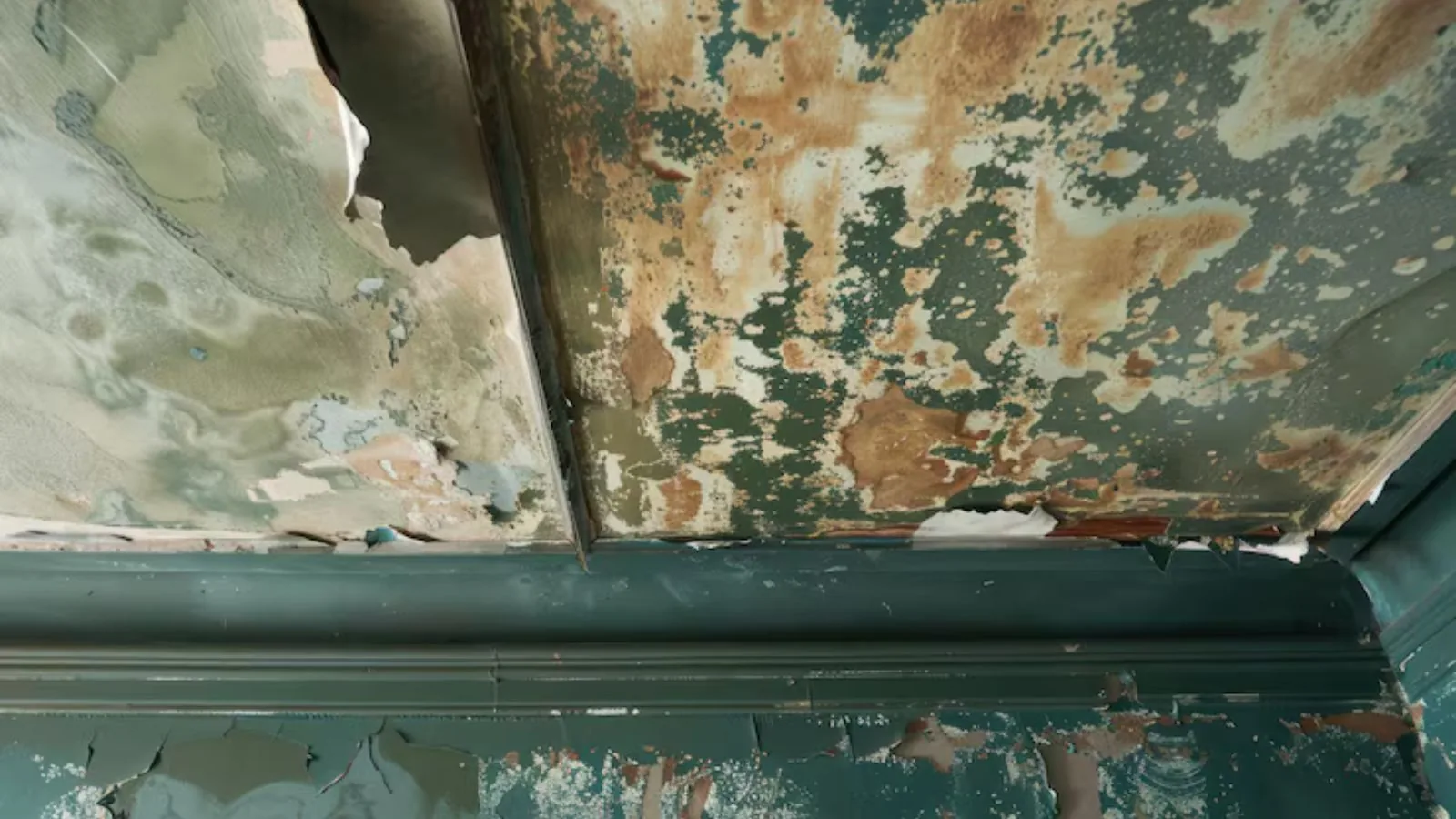
Paint bubbles when something pushes it off the surface from behind. In a bathroom, kitchen or along an outside wall, that something is often moisture. The bubble is the visible part of a problem that may reach well beyond it.
This guide explains what bubbled paint can mean, how to tell likely causes apart and what to do before you scrape and repaint.
What causes paint to bubble
Water behind a painted wall travels as liquid or as vapor and then pushes against the paint film. Common sources include a plumbing leak inside the wall, a roof or window leak, a bathroom with poor ventilation and a wall in contact with damp ground. Heat, poor surface preparation and painting over a damp surface can also cause blisters, so a bubble alone does not prove a leak.
Clues help. Bubbles that appear below a bathroom, beside a window or under a roofline point to water. Bubbles that come with a stain, a musty smell, a soft wall or a rising moisture reading point to water more strongly.
| What you see | More likely cause | First check |
|---|---|---|
| Bubbles below a bathroom or kitchen | Plumbing leak or splash | Fixture seals and supply lines |
| Bubbles on an outside wall near a window | Water entering around the window or siding | Caulk and flashing, see storm water damage |
| Bubbles on a ceiling | Roof, attic or plumbing above | See ceiling water damage |
| Bubbles low on a basement wall | Moisture from the ground or a floor leak | Gutters, grade and drains |
| Bubbles with no stain in a dry room | Painting conditions or heat | Ask a painter, and watch for change |
Do not pop and paint
Popping the blister and painting over it hides the signal and traps moisture. If the wall is wet, the new paint will bubble again. Instead, photograph the bubbles, mark their edges with a pencil and note the date. Check again in a few days to see whether they grow.
Press gently on the wall. A soft or crumbly feel means the drywall has absorbed water. A moisture meter and thermal camera can map the wet area without cutting the wall.
Bubbles spreading?
Call the 24/7 line for a moisture check. Scope and price come first, then the work.
What a restoration crew does
The crew reads moisture in the wall surface and nearby materials, then follows the readings to the edge of the wet area. If the drywall is soft, it is cut out and the cavity is dried before it is closed. If the wall is only damp, drying equipment may be enough. Finding and fixing the source, such as a failed fitting, is plumbing or building work.
The wall and drywall repair page covers cutting, drying and preparing a wall for repair.
Ridgefield conditions to keep in mind
Local NOAA normals, measured at Vancouver, show rainfall above five inches in each winter month from November through January, and about 37 inches over the year. Walls on the weather side of a house stay damp through long wet spells, so siding and window flashing deserve a look in fall.
Ridgefield's city planning documents describe clay-rich soils in the I-5 Junction area that drain slowly. Slow drainage can keep ground near foundations wet, which matters for low walls that bubble.
When it is probably not a leak
Fresh paint over a glossy surface, a bathroom without a working fan and a south-facing wall in strong sun can all cause blisters. If the wall is dry to a meter, the bubbles are local and nothing grows, a painter can scrape, prime and repaint.
If you are not sure, a moisture reading settles it. It costs little compared with painting over a wet wall twice.
A simple three-day test
If you are not sure whether the wall is wet, run a short test. Mark the outer edge of the bubbled area with a pencil and write the date beside it. Tape a small square of plastic wrap over a bare patch, sealing all four edges, and leave it for a day. Moisture that collects under the plastic means the wall is giving off water.
Check the marks again after three days and after the next heavy rain. Bubbles that stay the same size and a plastic square that stays clear point to a surface problem. Growth, new stains or a damp plastic square call for a moisture reading.
What to photograph for your records
- A wide shot of the whole wall with the ceiling and floor visible
- A close shot of the bubbles beside a ruler or coin for scale
- The pencil marks and the date
- Any plumbing fixtures, windows or roof lines above the wall
- Your moisture reading if a crew takes one
Choosing paint after the wall is dry
Once readings are normal and the source is fixed, scrape loose paint back to a sound edge, patch with the right compound and prime with a stain-blocking primer before the topcoat. Skipping the primer lets old stains bleed through. In bathrooms and kitchens, choose a paint made for damp rooms and run the exhaust fan during and after showers so the new film has a fair chance.
Frequently asked questions
Does bubbled paint always mean a leak?
No. Heat and poor preparation can cause blisters, but bubbles near water sources or with stains and softness usually point to moisture.
Should I pop the bubbles?
No. Photograph and mark them first, and have the wall checked for moisture.
Can I repaint right away?
Only after the wall is dry and the source is fixed. Painting over a wet wall brings the bubbles back.
What if the drywall feels soft?
Soft drywall has absorbed water and often has to be cut out, then the cavity is dried.
Who finds the source of the leak?
A plumber or builder fixes the source. A restoration crew dries what the water reached.